
On December 31, 2019, the WHO’s China office noted a Wuhan Municipal Health Commission statement about cases of “viral pneumonia” in Wuhan. The next day, January 1, 2020, WHO headquarters in Geneva activated a three-tiered emergency response structure spanning headquarters, regional offices, and national levels. In practical terms, the machinery of pandemic response was switched on immediately. In the argument of this chapter, that rapid escalation did not reflect sober caution. It marked the opening move of a coordinated operation.
The Wuhan statement itself was not extraordinary. Every winter, northern regions experience a rise in respiratory illness, and where treatment remains misguided, some of those illnesses progress to pneumonia and death. That pattern is old, seasonal, and familiar. What transformed it into a world emergency was not the underlying medical reality but the political and bureaucratic response layered onto it.
The WHO later named the operation COVID-19, but the naming came after the structure was already in motion. In this chapter’s framework, the core issue was institutional motive. The WHO is presented not as a neutral guardian of public health but as an organization whose power, revenue, and authority depend on recurring pandemic narratives.
By 2020 that system had come under threat from Donald Trump, whose funding cuts and hostility to global bureaucratic structures endangered the WHO’s financial and political position. Because 2020 was also a U.S. election year, the stakes were exceptionally high. A pandemic would not merely protect the WHO’s interests. It could also damage the reelection prospects of the president most likely to cut them further.
Laurie Garrett documented the Trump administration’s dismantling of major parts of the American pandemic-response bureaucracy. In 2018, the administration removed key parts of the federal pandemic chain of command and sought to reduce funding for programs built during the Obama years. Proposals included cutting residual Ebola funds and trimming disease-security budgets across multiple agencies. In ordinary budgetary language, these moves could be described as restructuring. In the framework of this chapter, however, they amounted to a direct strike against a deeply entrenched system of pandemic management.
That system is described here as an American Pandemic Alliance: a domestic network of bureaucratic, scientific, political, and corporate interests organized around the production and maintenance of perpetual emergency. The growth of Anthony Fauci’s empire is treated as a central expression of that alliance. Beginning with large HIV/AIDS appropriations and expanding across successive administrations, the NIAID budget and its associated institutional web became, in this telling, a permanent engine of influence and extraction.
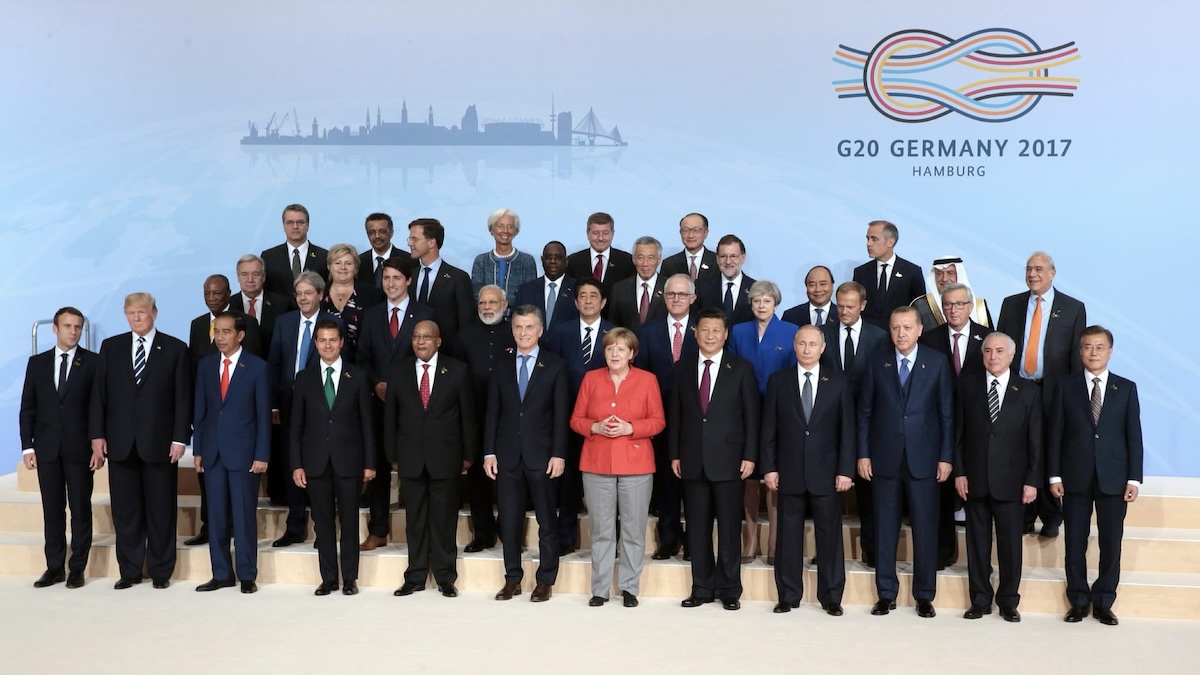
Fig. 2-11. Trump’s America First Policy Under Global Opposition
The same logic extended globally. Alongside the American Pandemic Alice stood the WHO’s Pandemic Alliance, and behind both stood what the chapter calls the World Globalists Alliance, aligned with the UN under Secretary-General António Guterres. In this framework, the WHO and UN are not independent sovereign powers; they depend on U.S. funding, U.S. prestige, and U.S.-aligned bureaucratic cooperation. But through that dependence they seek to exercise transnational authority over health, economics, and governance. Trump’s “America First” orientation therefore threatened not just a policy preference but an entire operating model.
By attacking the budgets and structures that sustained pandemic bureaucracy at home and abroad, Trump created a shared crisis for these aligned networks. The American Pandemic Alliance, the WHO’s Pandemic Alliance, and the UN’s World Globalists Alliance all faced the same enemy. This is the basis on which the chapter defines the Anti-Trump and Anti-Humanity Alliance, or ATAHA: the convergence of these forces into a single political and medical front aimed at destroying Trump’s presidency while expanding administrative control over the global population.
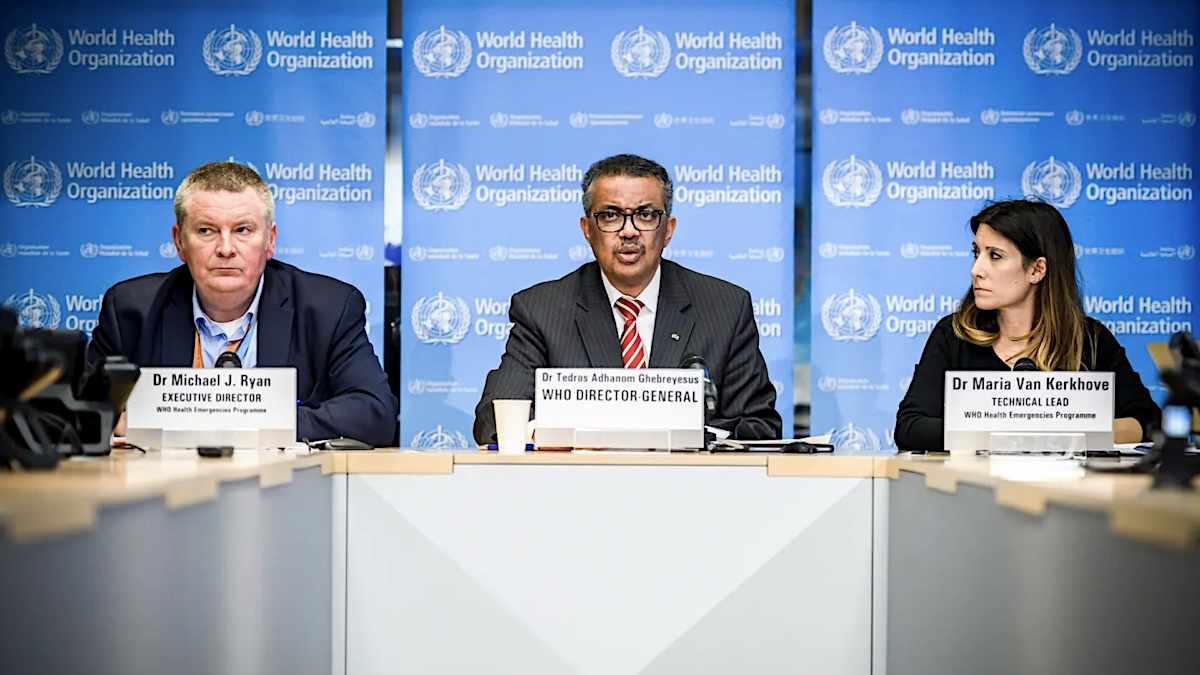
Fig. 2-12. Tedros: De Facto CEO of the COVID-19 Operation
In that alliance, Tedros Adhanom Ghebreyesus appears as the visible field commander, while António Guterres functions as the strategic figure in the background. Tedros did not act alone, however. His position was reinforced by a collaborator with far greater influence inside the American system as well as the global system: Anthony Fauci.
On January 10, 2017, at the Global Health Security Agenda summit held at Georgetown University, Fauci declared to the world with prophetic certainty that the incoming Trump administration would undoubtedly face a “surprise outbreak”:
If there’s one message that I want to leave with you today based on my experience and you will see that in a moment is that there is no question that there will be a challenge to the coming administration in the arena of infectious diseases… there will be a surprise outbreak… there are also other issues that we are talking about now are diseases that are brand-new that we’ve never heard before … I can say with some confidence that history tell us that we will definitely get surprised in the next few years.
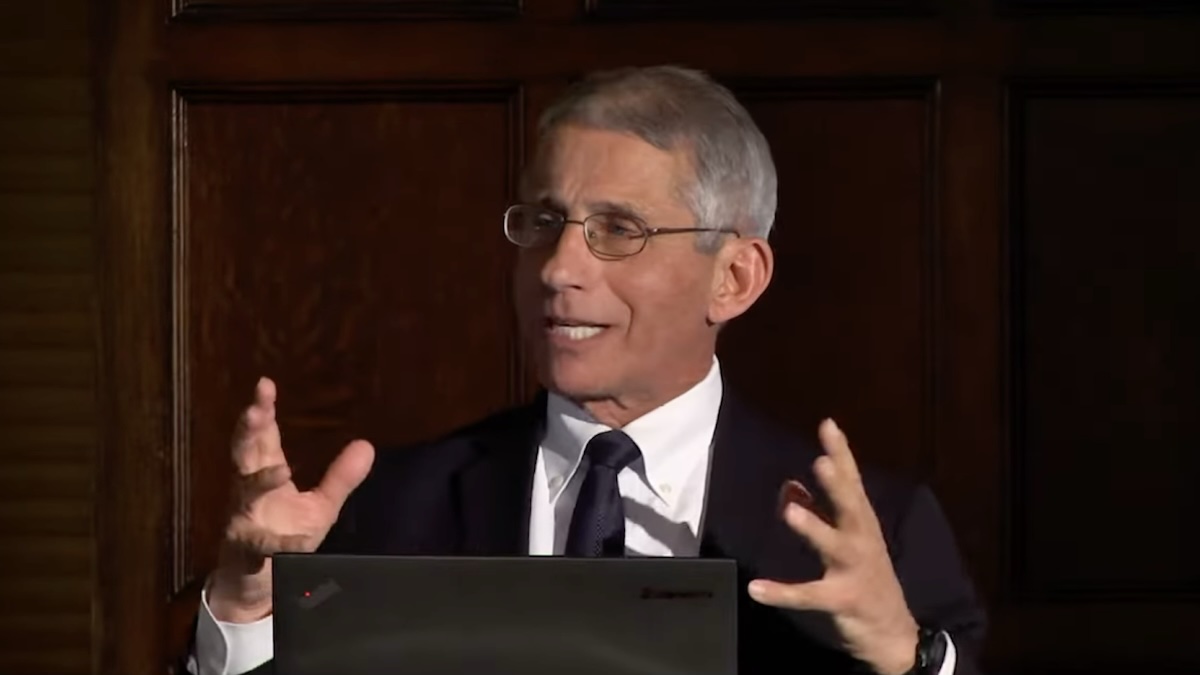
Fig. 2-13. Fauci: Predicting a Major Outbreak in 2017
Fauci framed that outcome not as a mere possibility but as something inevitable, during his tenure as director of NIAID, and particularly during the Obama administration. In 2009, President Obama approved $7.1 billion in funding for the influenza outbreak; in 2014, he approved $6.2 billion for the Ebola outbreak; and in 2016, he approved $1.9 billion for the Zika outbreak.
He favored the Obama administration because it was willing to allocate tax-payers money to his American Pandemic Alliance for “research.” Conversely, he disliked President Trump because the President was critical of his work. After President Trump took office, the already approved $1.9 billion in Zika virus funding was delayed, which Fauci described the waiting time as “a very painful process.” Throughout his tenure, Fauci arguably leveraged outbreaks to further his political and economic interests. This may explain the absolute certainty with which he predicted a “surprise outbreak” occurring during the Trump Administration.
Fauci’s America Pandemic Alliance’s expansion had begun long before Trump, especially during the George W. Bush years, when Fauci secured $15 billion in federal funding under the banner of AIDS prevention and related infectious-disease programs. Over time, this domestic apparatus became tightly integrated with the wider Washington establishment. Internationally, the same funding streams elevated Fauci into one of the most important architects of the WHO-centered pandemic system. By the time Trump entered office, Fauci was not simply a scientist. He was a central political and bureaucratic operator within a mature transnational alliance.
This is why the cooperation between Fauci and Tedros during the Trump years appears so consequential in the chapter’s argument. They shared the same strategic problem and stood to benefit from the same resolution. If Trump won reelection in 2020, Fauci might lose his position, and the WHO and UN could face deeper funding losses. If Trump lost, both men and their institutions would survive and likely expand.
That is exactly what followed. After Biden’s inauguration, Fauci was elevated to Chief Medical Advisor, and the U.S. immediately reversed Trump’s withdrawal from the WHO. Speaking to the WHO Executive Board on January 21, 2021, Fauci announced that the United States would remain in the organization and restore the financial commitments the Trump administration had interrupted. He addressed Tedros warmly and directly. Tedros replied in kind on social media, thanking “my brother Tony” for leading the delegation.
The public ease of that exchange is central to the chapter’s conclusion. In this telling, the outcome of the 2020 election was not simply a partisan transfer of power. It was a victory for the ATAHA: an alliance that used pandemic authority to damage Trump politically, secure institutional survival, restore funding streams, and widen the reach of global medical bureaucracy. COVID-19, therefore, is presented here not as an accidental public-health event but as the operating theater in which that alliance carried out its campaign.
References
- World Health Organization. Milestone: COVID-19 five years ago. Published December 30, 2024. Accessed Feb 22, 2026.
- Garrett L. Trump has sabotaged America’s coronavirus response. Published January 31, 2020. Accessed November 3, 2023.
- Fauci AS. Pandemic Preparedness in the Next Administration: Keynote Address. Published February 14, 2017. Accessed November 3, 2023.
- Roos R. Obama seeks more funds for novel flu fight. CIDRAP. Published June 5, 2009. Accessed November 3, 2023.
- Sifferlin A. Obama asks for $6.2 billion to fight Ebola. Time. Published November 5, 2014. Accessed November 3, 2023.
- Fletcher ER. Pressing restart—United States rejoins World Health Organization. Health Policy Watch. Published January 21, 2021. Accessed November 3, 2023.
- Chappell B. U.S. will remain in WHO, Fauci announces, as Biden reverses Trump move. NPR. Published January 21, 2021. Accessed May 23, 2021.