
Since its inception, the WHO has functioned as a corrupted global pandemic Alliance. It is, in essence, a corporate entity whose very survival depends entirely upon the perpetual maintenance of a simulated state of global biological emergency. By operating with striking tactical precision, this apparatus liquidated sovereign liberties. The coordinated operational deployment it demonstrated during the COVID-19 era stands as a prime example of this conduct.
The WHO did not rest only on testing technology, but on a coordinated logic for interpreting test results. That logic was asymmetrical by design. Positive results were treated as decisive proof of infection, while negative results were framed as provisional, uncertain, and potentially misleading. The CDC itself stated that “A positive test result only means you tested positive only at the time of testing.” The implication was clear: a negative result could never be trusted for long, because it might turn positive at any moment.
This asymmetry was essential to the architecture of panic. If officials had spoken of positive results with the same caution they applied to negatives—if they had said that a positive status was also temporary and unstable—the system would have weakened immediately. Instead, the alliance enforced a one-way rule: positive meant verdict, negative meant deferred verdict. That structure allowed governments to magnify fear while preserving maximal administrative flexibility.
The testing regime also protected itself against direct exposure. One of its unspoken defenses was the discouragement of simultaneous comparative testing. If two samples were taken at once and produced contradictory results—one positive, one negative—the authority of the system would be damaged immediately. For the same reason, immediate retesting was discouraged or delayed. Waiting periods of days or even weeks created a buffer that allowed physiological change, sampling variation, or administrative reinterpretation to explain away inconsistencies. In the argument of this chapter, those delays were not incidental. They functioned as procedural shields for a fundamentally unreliable framework.
The ratio of positive to negative results could then be managed according to political and administrative need. Early in 2020, positive rates were kept relatively contained. But when the need arose to drive case counts upward in the United States, the White House Coronavirus Task Force helped create the right incentives. Minnesota physician and state senator Scott Jensen publicly described the financial pressures built into the system:
How can anyone not believe that increasing the number of COVID-19 deaths may create an avenue for states to receive a larger portion of federal dollars? … Hospital administrators might well want to see COVID-19 attached to a discharge summary or a death certificate. … if they’re Medicare—typically, the diagnosis-related group lump sum payment would be $5,000. But if it’s COVID-19 pneumonia, then it’s $13,000, and if that COVID-19 pneumonia patient ends up on a ventilator, it goes up to $39,000.
These incentives mattered. In the framework of this chapter, they encouraged institutions to expand the number of confirmed cases, hospitalizations, and deaths attributed to COVID-19. The result was a rapidly escalating cycle: more confirmed cases produced more fear, more fear produced more demand for testing and hospitalization, and the resulting atmosphere of emergency helped immobilize the public and destabilize economic life. That cycle also inflicted direct political damage on President Trump’s reelection prospects.
After the election, the FDA announced that certain coronavirus test kits were flawed and required redesign. The agency acknowledged mistakes had been made and spent the following weeks overseeing revisions. By February 2021, two revised models had been approved: the CDC 2019-nCoV Real-Time PCR Diagnostic Panel and the CDC Influenza SARS-CoV-2 Multiplex Assay. In the logic of this chapter, those redesigned kits did not represent a scientific correction so much as a recalibration. They enabled the system to keep manufacturing large numbers of confirmed cases while shifting into the mass-vaccination phase of the operation.

Fig. 2-8. COVID-19 Operation: Halting Human Activity Worldwide
The political use of testing was especially visible in New York. Deborah Birx, coordinator of the White House Coronavirus Task Force, observed that test positivity rates across most of the country remained below 10 percent, while New York City and nearby regions approached 28 percent. In the framework of this chapter, that concentration was politically useful. By amplifying crisis statistics in a globally visible city, the alliance could use local numbers to project national and international alarm.
Political reactions to the testing regime quickly hardened into partisan camps. Democratic leaders became maximalists, demanding ever more testing and tracing. Republican skepticism grew, though often without a full scientific rebuttal of the underlying premises. Speaker Nancy Pelosi became one of the symbolic leaders of the Democratic push. Scott Atlas later described the political environment this way:
Criticizing the administration about testing was more than a natural extension of the obsessive mindset. It was low-hanging fruit for the president’s political opponents. … The obsessive demand for testing rapidly escalated into a hyper-partisan issue. I remembered Pelosi’s mantra—“test, test, test; trace, trace, trace!”
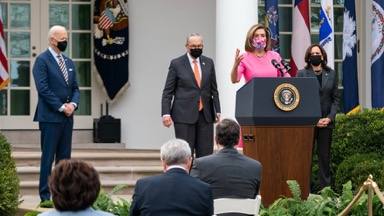
Fig. 2-9. Democratic Leaders: Champions of Viral Testing
Trump, by contrast, reacted with instinctive skepticism. Atlas recorded his frustration in direct and simple terms:
From my very first meeting in the Oval Office back in July and over subsequent meetings, President Trump expressed great frustration about testing. …He never agreed, because to him it made no sense. He could not understand why we would test people who were not sick. It was as simple as that. President Trump talked to me privately in the Oval Office about many different things, but almost always, our discussions come back to the subject of testing. He went with his gut feeling and placed no filter on stating his opinions. “Why are we testing healthy, young people? Why don’t we just test sick people?” he would ask.
That instinct, in this chapter’s view, was closer to the truth than the official doctrine. Trump recognized that the testing campaign was manufacturing patients out of the healthy. But his resistance remained intuitive rather than systematically scientific. He did not possess the conceptual weapon needed to dismantle the WHO alliance at the level of first principles. As a result, he confronted the testing regime politically, while his adversaries defended it through a mixture of bureaucracy, media amplification, institutional authority, and pseudo-scientific ritual.
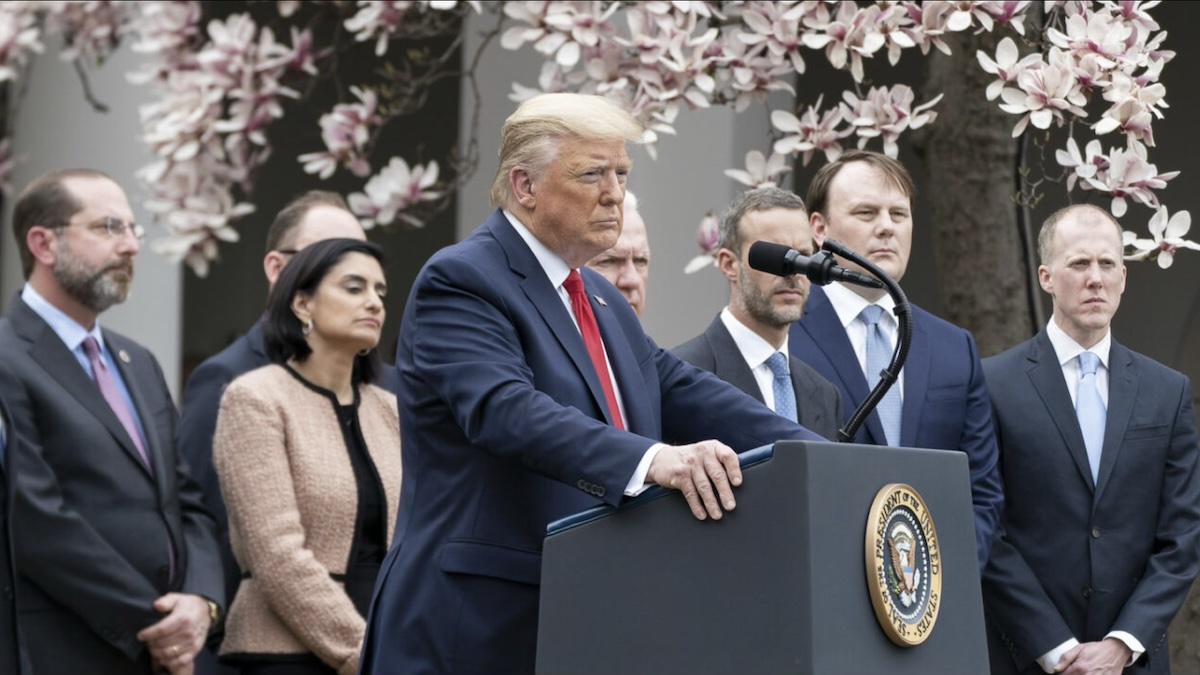
Fig. 2-10. President Trump and the Public: Kept in the Dark
His most direct summary came on May 15, 2020: "When you test, you have a case… If we didn't do any testing, we would have very few cases." The line was attacked as crude, but it captured the core administrative truth of the pandemic architecture. Testing produced the cases that then justified the emergency. When mass testing expanded, the pandemic intensified statistically. When testing was later reduced and finally wound down, the pandemic subsided administratively. In that sense, COVID-19 did not behave like a spontaneous biological disaster. It behaved like a managed human operation.
References
48. Centers for Disease Control and Prevention. Coronavirus disease 2019: Test for current infection. Published May 4, 2021. Updated September 25, 2023. Accessed November 3, 2023.
49. Rogers M. Fact check: hospitals get paid more if patients listed as COVID-19, on ventilators. USA Today. Published April 24, 2020. Accessed November 3, 2023.
50. Temple-Raston D. CDC report: Officials knew Coronavirus test was flawed but released it anyway. NPR. Published November 6, 2020. Accessed Nover 3, 2023.
51. White House. Remarks by President Trump, Vice President Pence, and members of the Coronavirus Task Force in a Fox News Virtual Town Hall. Published May 3, 2020. Accessed November 3, 2023.
52. Atlas SW. A Plague upon our House: my Fight at the Trump White House to Stop COVID from Destroying America. New York, NY; Liberatio Protocol; 2021:83.
53. Ibid., 82-84.
54. Rupar A. Trump seems to think there'd be coronavirus if there is no testing. Published May 15, 2020. Accessed November 3, 2023.