
On January 10, 2020, Chinese researchers released the genetic sequence of the purported novel virus. Instead of pausing to verify the underlying claim, the WHO immediately treated it as a breakthrough and began distributing technical guidance to governments around the world on how to detect and control it. As the only international body empowered to declare a pandemic, the WHO’s response marked the official beginning of a globally coordinated testing regime built on an unverified premise.
That regime was elevated further on February 11, 2020, when WHO Director-General Tedros Adhanom Ghebreyesus formally named the supposed virus SARS-CoV-2 and the disease it allegedly caused COVID-19. The naming was not just terminological. It created the administrative framework through which healthy civilians could be reclassified as patients. Testing would become the instrument of that transformation.
Virology had long relied on diagnostic ambiguity, but the COVID operation expanded it to an unprecedented scale. Test designers quietly acknowledged the limits of their own tools, warning that such assays should be treated as adjuncts to history and physical examination rather than substitutes for them. Yet in practice, mass testing became the defining criterion. People were tested regardless of symptoms, and positive results were elevated into evidence of disease.

Fig. 2-4. COVID-19 Patients: Created by Viral Testing
Tedros drove that logic relentlessly. He urged countries to “test, test, test,” insisting that every suspected case be tested, isolated if positive, and followed by contact tracing. The rhetoric suggested clinical rigor, but the operational effect was different. Most of those being tested were not ill. They were healthy civilians, most with no symptoms at all. Once a positive result appeared, they were entered into the system as confirmed COVID-19 cases.
The testing campaign divided into two broad categories: tests for past infection and tests for current infection. Both, in the framework of this chapter, were fraudulent.
The first category involved antibody testing. The WHO and FDA claimed that SARS-CoV-2 antibody tests could identify people previously infected with the virus or recovered from COVID-19. But that claim depended on the prior physical existence of SARS-CoV-2 itself. If the virus had never been empirically established, then the notion of a SARS-CoV-2-specific antibody was already suspect. Even apart from that, antibodies such as IgM and IgG are not uniquely meaningful in the way the public was led to believe. Standard immunology treats them as general immune responses to foreign substances, not as simple proof of one uniquely identified viral encounter. Thus the antibody framework added a second layer of uncertainty on top of an already unproven viral premise.
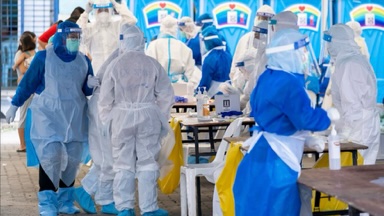
Fig. 2-5. Viral Testing: Designed for the Conceptual Virus
Testing for current infection was no stronger. The WHO claimed that antigen tests could identify active cases by detecting protein fragments rather than the whole virus. But this only pushed the problem back one step. Before one can detect fragments of a virus, one must first establish the physical existence of the virus itself. Without that prior proof, the fragment becomes just another inferred target inside a self- referential system.
The same issue applied to RT-PCR. As argued earlier, the “novel” virus announced by China was a conceptual construct, and its published RNA sequence a curated digital artifact rather than a directly demonstrated physical entity. On that basis, the WHO promoted RT-PCR as the global standard for detection. According to Our World in Data, by June 18, 2022, the United States had reported more than 912 million tests, and the global total had surpassed 5 billion. The overwhelming majority of reported COVID-19 cases were generated through the highly questionable virus testing.

Fig. 2-6. Task Force: Organizers of National Viral Testing
The speed of the rollout is itself revealing. China released the sequence on January 10, 2020. The WHO began rolling out RT-PCR guidance on January 17. The FDA followed on January 24. That sequence of events suggests not careful scientific validation but rapid administrative deployment. The question of whether the virus itself had been physically established was never allowed to slow the rollout.
The CDC’s Emergency Use Authorization for the test made the underlying ambiguity plain. It stated:
Results are for the identification of SARS-CoV-2 RNA. SARS-CoV-2 RNA is generally detectable in upper and lower respiratory specimens during infection. Positive results are indicative of active infection with SARS-CoV-2 but do not rule out bacterial infection or co-infection with other viruses. The agent detected may not be the definite cause of disease. … Negative results do not preclude SARS-CoV-2 infection and should not be used as the sole basis for treatment or other patient management decisions. Negative results must be combined with clinical observations, patient history, and epidemiological information.
That language reveals the core problem. A positive result is said to indicate active infection, but not to rule out other causes. The detected agent may not even be the definite cause of disease. Yet a negative result also does not rule out infection. In other words, the test is structured so that positive findings are treated as administratively useful while negative findings remain open to reinterpretation. This is not a clean diagnostic standard. It is an asymmetrical system designed to preserve case generation.
For healthy civilians, the logic becomes even weaker. If a person has no disease, then the statement that the detected agent may not be the definite cause of disease exposes the redundancy of the entire exercise. The WHO itself acknowledged that some positive individuals were “not likely to be infectious” and “unlikely to be able to transmit the virus to another person.” Once that concession is made, the distance between a positive test and a meaningful clinical case becomes even wider.
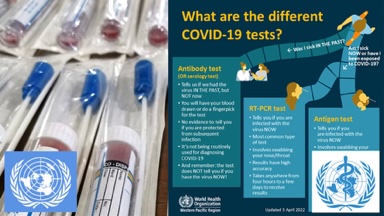
Fig. 2-7. UN and WHO: Headquarters for Global Viral Testing
The absurdity is complete when both sides of the result are examined together: a positive result does not definitively prove meaningful infection, and a negative result does not rule it out. The practical effect was to turn testing into a case-manufacturing system rather than a diagnostic necessity. By classifying positive results in healthy civilians as confirmed COVID-19 cases, the WHO and partner agencies created hundreds of millions of statistical patients.
The architecture expanded further with the Influenza SARS- CoV-2 Multiplex Assay. First launched by the CDC and then promoted through WHO channels, this all-in-one test claimed to detect influenza A, influenza B, and SARS-CoV-2
simultaneously. Its Emergency Use Authorization repeated almost the same logic:
The Influenza SARS-CoV-2 (Flu SC2) Multiplex Assay is intended for use in the detection and differentiation of SARS-CoV-2, influenza A, and/or influenza B viral RNA in patient specimens, and is not intended to detect influenza C. RNA from influenza A, influenza B, and/or SARS-CoV-2 viruses is generally detectable in upper and/or lower respiratory specimens during infection. Positive results are indicative of active infection but do not rule out bacterial infection or co-infection with other viruses; clinical correlation with patient history and other diagnostic information is necessary to determine patient infection status. The agent detected may not be the definite cause of disease…
Negative Flu SC2 Multiplex Assay results do not preclude SARS-CoV-2, influenza A, and/or influenza B infection and should not be used as the sole basis for diagnosis, treatment or other patient management decisions. Negative results must be combined with clinical observations, patient history, and/or epidemiological information.
This is the same template-based logic in expanded form. A positive result still does not settle causation. A negative result still does not rule out infection. The asymmetry remains: doubt is directed primarily at negatives, while positives are preserved for administrative use. That design ensured that symptomatic people could be swept into the positive column even when the underlying logic remained unresolved.
In the framework of this chapter, the deeper problem is that the Multiplex Assay was built to detect targets never physically established in the required sense. Neither SARS-CoV-2 nor influenza, as presented here, had been validated through the kind of empirical demonstration necessary to support such sweeping claims. The testing framework therefore did not diagnose a real pandemic. It manufactured one.
The conclusion is straightforward. The RT-PCR system and the Multiplex Assay were not neutral medical tools. They were the central machinery by which a healthy global population was transformed into a database of confirmed cases. Billions of people were tested and labeled. And the resulting case counts were then used to justify the pandemic architecture that followed.
References
39. World Health Organization. Listings of WHO’s response to COVID-19. Published June 29, 2020. Updated January 29, 2021. Accessed November 3, 2023.
40. Jameson JL, Fauci AS, Kasper DL, et al., eds. Harrison's Principles of Internal Medicine. 20th ed. New York, NY: McGraw-Hill; 2018:862.
41. World Health Organization. WHO Director-General’s opening remarks at the media briefing on COVID-19. Published March 16, 2020. Accessed November 3, 2023.
42. Food and Drug Administration. Antibody (serology) testing for COVID-19: information for parents and consumers. Accessed March 23, 2023.
43. Doctor NDTV. What do IgG and IgM indicate?. Accessed December 20, 2021.
44. Our World in Data. Total COVID-19 tests. Accessed November 22, 2024.
45. Centers for Disease Control and Prevention. CDC 2019-Novel Coronavirus (2019-nCoV) Real-Time RT-PCR Diagnostic Panel. Published March 7,2023. Accessed December 7, 2025.
46. World Health Organization. Criteria for releasing COVID-19 patients from isolation. Published June 17, 2020. Accessed December 7, 2025.
47. Food and Drug Administration and Prevention. CDC influenza SARS-CoV-2 (Flu-SC2) Multiplex Assay. Published August 5, 2021. Accessed November 3, 2023.