
In the framework of this chapter, COVID-19 functioned as an undeclared asymmetric war. On one side stood the ATAHA, organized through the UN, the WHO, aligned health officials, and left-wing political networks. On the other stood President Trump and the public, largely unaware that they were being drawn into a coordinated operation. The damage was not only political. It was economic, social, psychological, and physical.
A revealing moment came on March 24, when Fox News host Bill Hemmer held a virtual town hall with President Trump and three members of the White House Coronavirus Task Force. Trump spoke openly about wanting the country reopened by Easter. He said he would love to have the country “opened up and just raring to go” by that date. His position was clear: the shutdown was already becoming intolerable, and he wanted a path out.
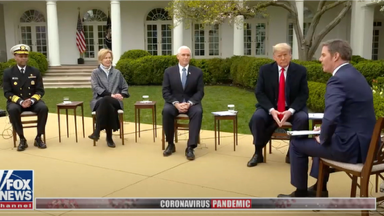
Fig. 3-7. Task Force: Unified Gaslighting to Postpone Lockdowns
But the structure of the discussion revealed the imbalance. Trump and Hemmer represented the passive side of the conflict described in this chapter—people trying to navigate events while still accepting the official virus framework. Opposite them were Vice President Mike Pence, Deborah Birx, and Surgeon General Jerome Adams, all speaking in the language of expertise, reassurance, and institutional control. Outwardly they appeared supportive of the president. In practice, the section argues, they were tightening the conceptual trap around him.
Birx set the tone early by describing SARS-CoV-2 as an RNA virus that mutates constantly. That kind of language mattered because it reinforced the underlying biological premise on which the entire emergency rested. Once the president and the audience accepted that premise, everything else—case surges, policy restrictions, caution, delay—could be presented as technically necessary rather than politically chosen.
Hemmer’s immediate response exposed the problem. He spoke of hoping “we can kill the virus” and help people get back to normal life. That formulation showed how completely the official frame had taken hold. If the virus was real, highly contagious, and dangerous in the way Birx and Fauci described, then reopening could always be postponed in the name of caution. The public might resent the lockdowns, but it would still struggle to reject them outright.
Birx then reinforced the same point with testing data. She said new cases had surged over the previous eight days, citing a national positivity rate of 10 percent and a New York City rate of 28 percent. She attributed the spike to urban density, international travel, and even infections from touching metal surfaces in the subway. In the framework of this chapter, these explanations were not neutral scientific observations. They were part of the ongoing use of testing to sustain fear and justify continued restrictions.
All three Task Force representatives signaled that testing would be expanded further. That promise was presented as a necessary public-health measure. But the chapter’s argument is that expanding testing meant expanding case production. More testing would generate more positives; more positives would justify more delay; more delay would prolong the lockdown regime. The president’s side, still trapped inside the infectious-virus model, could hear this and yet remain unable to break free of its logic.
Trump’s determination to reopen the country alarmed Fauci. The very next day, March 25, he appeared in a virtual CNN town hall with Chris Cuomo to reinforce the crisis narrative. When Cuomo asked why New York City cases had accelerated so sharply, Fauci echoed the same explanation Birx had used: New York was a travel hub, first from China and then from Europe, and therefore naturally dominated the U.S. case picture.
Cuomo then asked the more important question: if the country had just entered a two-week lockdown, why was Fauci already pushing for extension? Fauci’s answer was one of the defining lines of the period: “You don’t make the timeline; the virus makes the timeline.” That sentence condensed the whole political strategy. It transferred authority from elected officials and ordinary judgment to an invisible biological threat interpreted exclusively by experts. Once accepted, it allowed lockdowns to become indefinite.
The same pattern repeated on March 26 in a CNN town hall hosted by Anderson Cooper. Cooper raised the end of the initial fifteen-day distancing period and asked when the virus might be under control. Fauci gave essentially the same answer: you do not make the timeline; the virus does. Again, the practical effect was to suspend ordinary political decision-making and place social life under open-ended expert management.
Dr. Sanjay Gupta then joined Fauci in reinforcing the same line. Gupta asked whether the accelerating numbers meant it was too early to roll back restrictions. Fauci responded that the president’s Easter timeline was merely aspirational and that decisions had to be based on “the data.” He repeated the core message: when cases are rising dramatically, that is the time to “hunker down” and intensify mitigation.
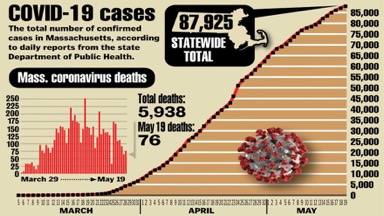
Fig. 3-8. Fauci: Testing Data Dictates Lockdown Policies
That phrase—“go with the data”—was central to the strategy. In the framework of this chapter, the White House Coronavirus Task Force manufactured the very data it then invoked as objective reality. Reported daily cases surged from 238,628 on April 1 to 1,195,621 by May 1.97 Reported daily deaths also rose sharply over the same period. Those numbers were then used to argue that reopening was impossible because the virus was spreading too rapidly.
The mechanism was self-reinforcing. Institutions such as the NIH, FDA, CDC, and the Task Force itself carried enormous public credibility. Their numbers were treated as neutral facts rather than outputs of a politically loaded testing system. That institutional trust made the gaslighting effective. The president and the public were not being manipulated by fringe actors. They were being manipulated, in the framework of this chapter, by the very agencies they had been trained to trust.
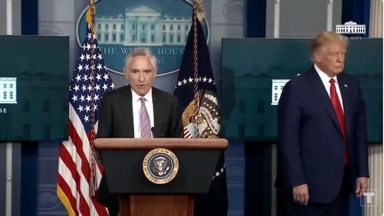
Fig. 3-9. Dr. Atlas and President Trump: Confused and Uncertain
At the time when the nation was plunged into a state of extreme bewilderment, Trump brought in Dr. Scott Atlas from Stanford as a special adviser. Many hoped he would help reverse the course of the lockdown regime. But in the framework of this chapter, Atlas proved unable to break the underlying conceptual hold of the COVID narrative. His own answers illustrate the problem. When Trump asked whether the initial shutdown had been reasonable, Atlas said yes. When Trump questioned widespread testing, Atlas said testing was essential. When Fauci asked about mitigation measures such as social distancing, Atlas affirmed that he supported them.
Those responses mattered because they showed that even one of Trump’s alternative advisers still accepted the key premises of the system. He may have opposed some excesses, but he did not reject the structure that made them possible. That left Trump strategically isolated. He had better instincts than many around him, but he lacked an adviser with enough conceptual independence to dismantle the full architecture of the trap.
That isolation is the point of the section. Trump’s blind spot about the virus prevented him from fully understanding the war being waged against him. The alliance confronting him constructed an artificial reality in which the same assumptions were repeated by health officials, political opponents, media figures, and even members of his own circle. Every road led back to the same conclusion: the virus is real, the danger is growing, the data demand caution, and reopening must wait.
In the framework of this chapter, that is how weeks of lockdown became years of lockdown logic. Even when formal restrictions shifted or varied by state, the governing model remained in place: rule by case counts, deference to expert projections, and open-ended social control justified by an invisible threat. By the time Election Day arrived, the undeclared war against Trump had already narrowed his path to reelection. The country had been kept inside a manufactured emergency long enough for the political consequences to take hold.
References
106. Rev. Donal Trump coronavirus town hall transcript March 24: Trump wants to restart the economy by Easter. Published March 24, 2020. Accessed August 20, 2022.
107. Fauci AS. Dr. Fauci: You don’t make the timeline, the virus does.. CNN. Published March 25, 2020. Accessed June 6, 2021.
108. CNN Global town Hall: Coronavirus facts and fears—transcripts. Aired March 26, 2020. Accessed May 12, 2024.
109. Atlas SW. A Plague upon our House to Stop COVID from Destroying America. New York, NY: Post Hill Press. 2021:60.
110. Ibid., 83
111. Ibid., 148