
After President Trump, Congress, and the American public had been drawn deeper into the COVID narrative, the next step was global escalation. On March 11, 2020, Tedros held a virtual press conference and formally characterized COVID-19 as a pandemic. In the framework of this chapter, that moment was not a neutral recognition of reality. It was the global activation point of the operation.
Tedros justified the declaration by pointing to rapidly rising case counts and expanding geographic spread. He said that cases outside China had increased thirteen-fold in two weeks, that affected countries had tripled, and that more than 118,000 cases and 4,291 deaths had been reported across 114 countries. He warned that the number of cases, deaths, and affected countries would climb higher still and concluded that the outbreak could therefore be characterized as a pandemic.
At the same time, he noted that more than 90 percent of cases were concentrated in just four countries, and that China and South Korea were already seeing major declines. He also acknowledged that eighty-one countries had reported no cases at all and that fifty-seven countries had reported ten or fewer. On its face, this should have weakened the case for a generalized global emergency. Instead, the numbers were used to intensify pressure on countries that had not yet fully entered the system of testing, case production, and response measures.
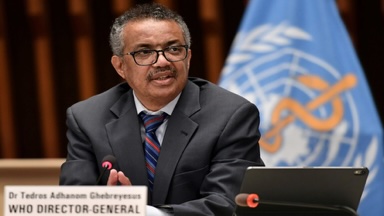
Fig. 3-3. Tedros—Entrapping National Governments into Action
In the framework of this chapter, the speech was deliberately misleading at every key point. If SARS-CoV-2 did not exist as a proven physical entity, then the case numbers being cited were already artifacts of a testing system built on a false premise. Under such conditions, infection totals could be expanded, reduced, or redirected administratively. The meaning of the numbers lay not in biological certainty but in the power of institutions to define reality through testing.
The death toll raised an even more serious issue. Tedros stated that 4,291 people had died. If those deaths were falsely attributed, then the number itself was deceptive. If they were real, then the question shifted immediately to causation: were they the result of a novel virus, or of the same misdiagnoses and harmful treatments that recur throughout the history of respiratory disease? In the argument of this chapter, that distinction is crucial. Pandemic rhetoric converted deaths of ambiguous or iatrogenic origin into proof of viral danger.
Tedros also used the conference to pressure countries that had not yet fully complied. Eighty-one had reported no cases, and fifty-seven had reported ten or fewer. Rather than treating that as evidence of limited spread, he treated it as evidence of insufficient action. He demanded testing, isolation, tracing, and mobilization. That demand matters because, in the logic of this chapter, testing was the mechanism by which cases were manufactured. A country that refused to test at scale limited the ability of the WHO to create the appearance of an epidemic inside its borders. A country that accepted the testing regime accepted the case-production machinery with it.
The WHO even supplied the practical means to expand the process, distributing free test kits to countries such as 100,000 to Iran. This was not merely aid. It was the infrastructure of narrative expansion. Testing created cases; cases justified emergency measures; emergency measures created the appearance of viral severity.
In the same March 11 speech, Tedros said the crisis required a “whole-of-government, all-of-society” approach. That phrase is revealing. It signaled that the operation would not remain within medicine. Every major institution—government, media, business, education, transportation, and civil society—would be drawn into the campaign. The pandemic was being defined not as a health event alone, but as a total social mobilization.
Tedros also said, with striking confidence, that in the days and weeks ahead the world should expect cases, deaths, and affected countries to rise even higher. In ordinary terms, that could be read as a warning. In the framework of this chapter, it reads more like an operational forecast. He was not merely describing what might happen. He was signaling the direction in which the machinery would be pushed.
That same day, the U.S. branch of the operation moved in sync. Congress held a hearing on “Coronavirus Preparedness and Response,” during which Democratic leaders accused Trump of downplaying the threat. House Oversight Committee Chairwoman Carolyn Maloney asked whether the administration was exacerbating the crisis by minimizing it. Fauci then amplified Tedros’s message domestically. He warned that things would get worse and said that if aggressive containment and mitigation were not imposed, the number of cases could rise into “many, many millions.”
This was the same rhetorical pattern at a national scale: inflate the threat, define skepticism as irresponsibility, and pressure the president into accepting the emergency frame. By that evening, Trump—under pressure from the White House Coronavirus Task Force, Democratic leadership, and establishment Republicans—held a press conference of his own and echoed the WHO’s declaration, saying that the organization had officially announced a global pandemic.
That moment mattered because it represented forced convergence. Trump did not create Tedros’s narrative, but he was maneuvered into publicly ratifying it. Once the president himself repeated the pandemic declaration, the political battlefield changed. Measures that would previously have seemed radical could now be justified as emergency responses endorsed from above.
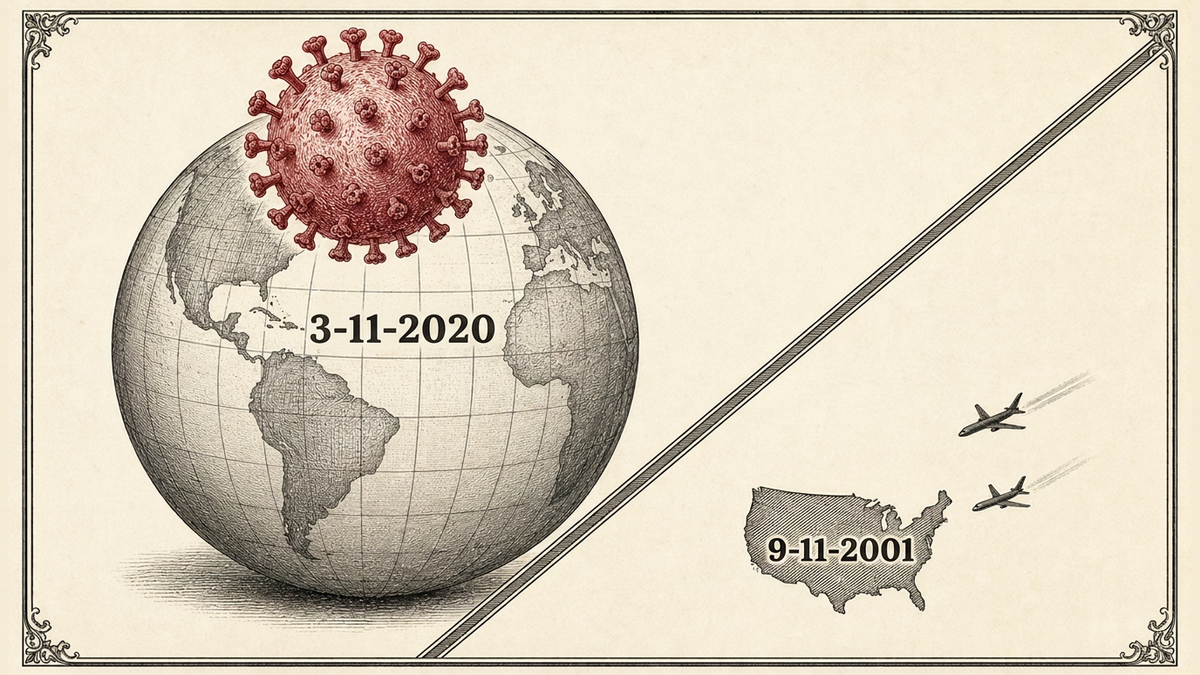
Fig. 3-4. 3/11 Operation: Far Exceeding the Scale of 9/11
In the logic of this chapter, March 11, 2020 was therefore the formal worldwide launch of the COVID-19 operation. It was the day the emergency was globalized, the day the testing numbers were converted into a universal crisis, and the day political resistance became harder to sustain. The declaration was designed not simply to describe the state of the world, but to reshape it—economically, politically, and psychologically.
The section closes by treating March 11 as an event of historic scale. September 11, 2001 struck at symbols of American power and killed thousands. March 11, 2020, in the framework of this chapter, initiated a far larger operation: one that entered every household, destabilized the global economy, altered the daily lives of billions, and helped lay the ground for millions of deaths and lasting damage to public health.
References
93. World Health Organization. Virtual press conference on COVID-19. Published March 11, 2020. Accessed May 5, 2021.
94. U.S. House of Representatives. Coronavirus preparedness and response. Hearing before the Committee on Oversight and Reform. 116th Congress, Serial No. 116-96. Published March 11, 2020.
95. Wolf ZB, O’key S. Trump’s coronavirus speech, annotated. CNN Politics. Published March 11, 2020. Accessed November 6, 2023.
96. Federal Bureau Investigation. 9/11 investigation. Famous Cases & Criminals. Accessed December 26, 2025.