
The COVID operation in the United States cannot, in the framework of this chapter, be explained by a few prominent politicians alone. It depended on a much larger institutional apparatus. Across the federal government, pandemic guidelines, emergency authorities, public-health agencies, and research networks converged into a system that from the outset uniformly presented the same story to President Trump, Congress, the courts, the media, and the public. This section treats that system as a federal gaslighting cartel: a coordinated bureaucracy that sustained the pandemic narrative long after its basic premises should have been challenged.
For example, at the January 11, 2022, Senate hearing, CDC Director Rochelle Walensky, NIAID Director Anthony Fauci, Acting FDA Commissioner Janet Woodcock, and HHS Assistant Secretary Dawn O’Connell testified together and jointly misled the senators. In the framework of this chapter, their testimony did not clarify the truth of the pandemic. It reinforced the official storyline of a highly contagious and dangerous novel virus, thereby reaffirming the legitimacy of the emergency and the interventions built upon it.
But the operational architecture, this section argues, extended far beyond a mere quartet of individual officials; the true mechanism of control was structural and interagency. Even in early 2020, the CDC convened the One-Health Federal Interagency COVID-19 Coordination Group, a sprawling apparatus that integrated twenty federal agencies across multiple executive departments. This entity was engineered to synchronize operations with broader U.S. government partners, ensuring that the federal apparatus addressed the crisis jointly, uniformly, and without internal dissent.
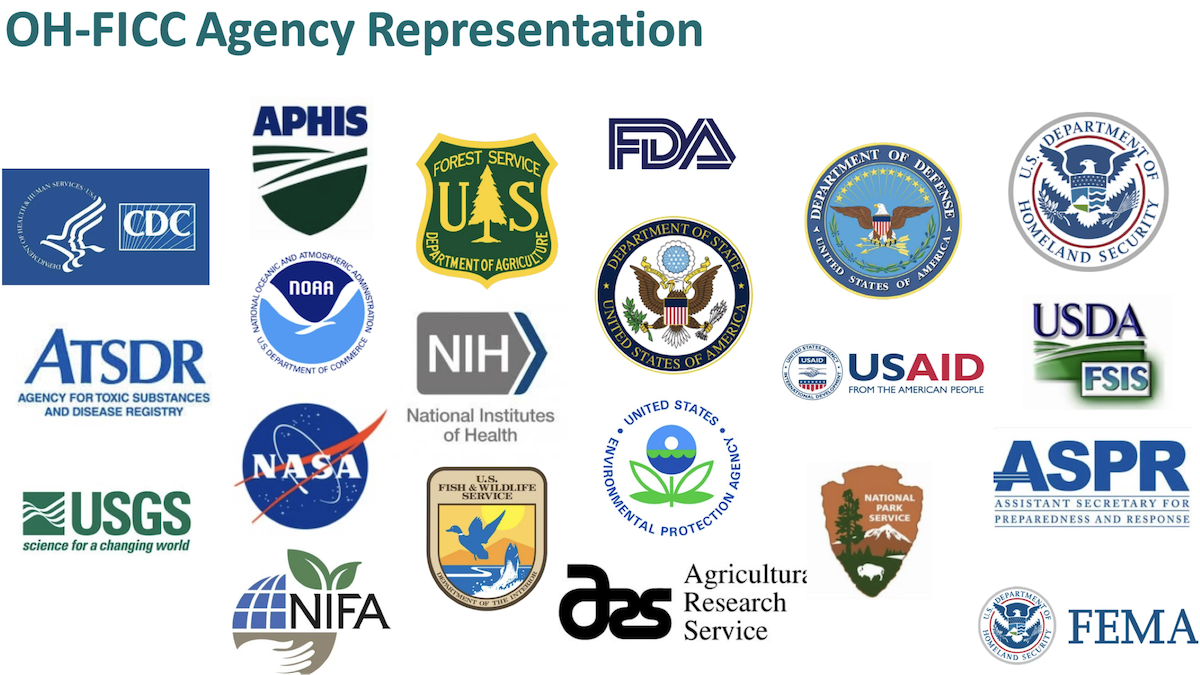
Fig. 3-14. OH-FICC: The National COVID Disinformation Engine
By early 2021, the Department of Health and Human Services (HHS) further consolidated this institutional grip by forming the SARS-CoV-2 Interagency Group (SIG). This body bound together the HHS, CDC, NIH, FDA, Biomedical Advanced Research and Development Authority (BARDA), and the Department of Defense (DoD). According to the FDA’s own internal documentation, the group existed to centrally coordinate the characterization of emerging variants and unilaterally assess their impact on vaccines, therapeutics, and diagnostics.
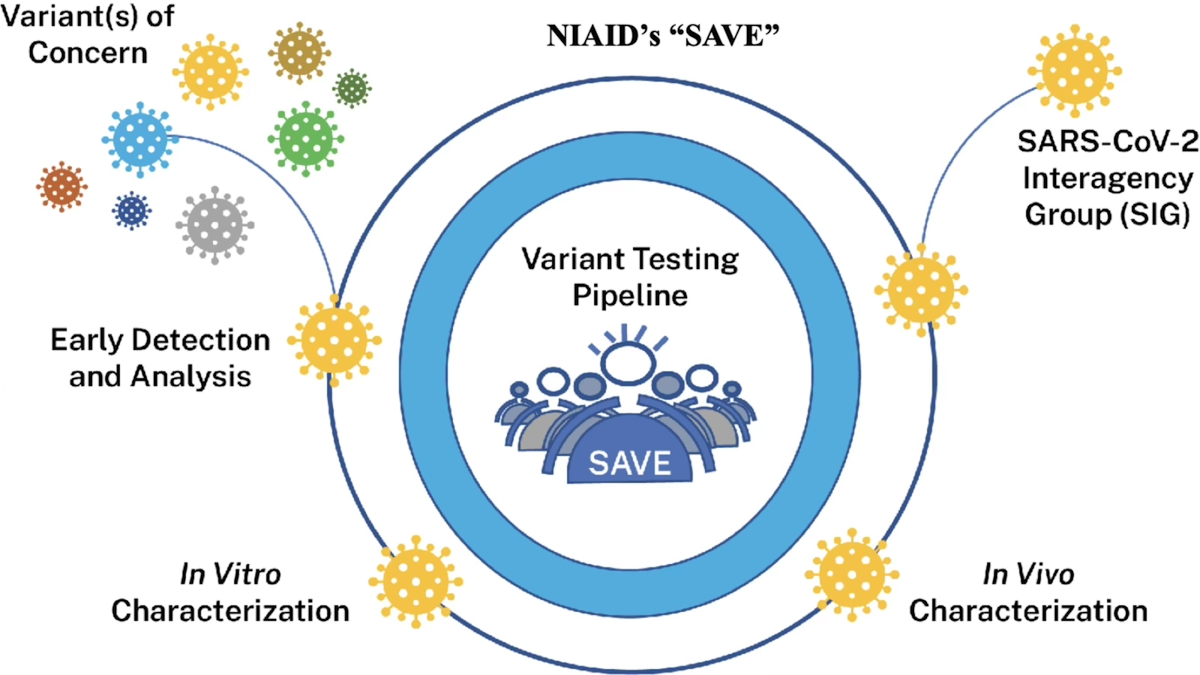
Fig. 3-15. SIG: National Disinformation/Gaslighting Headquarters
That description is revealing for two reasons. First, it demonstrates the degree of organizational integration achieved across the entire country surrounding SARS-CoV-2—as an indisputable object of policy. Second, it shows how variant classification, diagnostics, therapeutics, and vaccines were all tied together under one interagency framework. In the framework of this chapter, SIG did not merely study a virus. It helped stabilize a governing narrative around one.
The scale of this machinery was substantial. The core agencies alone—CDC, NIH, FDA, BARDA, and DoD—each possessed vast internal capacities, independent budgets, scientific networks, contracting power, and institutional prestige. When aligned, they could shape the national understanding of disease, define acceptable evidence, steer public messaging, and direct enormous streams of money toward favored projects and products.
NIAID provides a particularly clear example. Within it sat the SARS-CoV-2 Assessment of Viral Evolution program, or SAVE, organized into multiple teams. One team assembled more than a hundred domestic and international scientists across virology, immunology, vaccinology, structural biology, bioinformatics, viral genetics, and evolutionary theory. Another linked federal and military institutions such as the CDC, FDA, BARDA, Los Alamos, the Vaccine Research Center, Rocky Mountain Laboratories, and Walter Reed. Additional teams extended the network into leading universities and collaborating organizations across the United States and abroad.
The significance of SAVE is not merely that it was large. It is that it demonstrates how deeply the SARS-CoV-2 narrative was embedded across scientific, academic, military, and regulatory institutions. In the framework of this chapter, such networks did not simply investigate a phenomenon neutrally. They participated in the production, reinforcement, and circulation of the official story of viral emergence, mutation, and threat.
The section argues that this made the U.S branch of the ATAHA more powerful in practice than the elected government it purported to serve. Trump occupied the presidency, but the bureaucratic and scientific infrastructure surrounding him could generate its own reality: its own case counts, its own expert consensus, its own emergency rationales, and its own public messaging. In that sense, the problem was not only opposition to Trump from outside the state. It was governance from within the state by a class of officials and institutions with their own continuity, legitimacy, and agenda.
That continuity becomes visible in the contrast between Francis Collins and Fauci. On October 5, 2021, Collins announced his retirement as NIH Director after twelve years of service, saying that no single person should stay in such a role too long and that it was time for new leadership. In the framework of this chapter, that line carries more weight than Collins may have intended. If twelve years is too long, Fauci’s thirty-seven years at the head of NIAID appear extraordinary in scale and influence.

Fig. 3-16. Awakened NIH Director: Strategic Resignation
The contrast matters because Fauci is treated here not as one expert among many, but as the central architect of the federal pandemic empire. Over decades, he accumulated power through infectious-disease research, federal grant networks, institutional alliances, media stature, and political durability. By the time COVID-19 arrived, he presided over a mature system capable of shaping how an entire society would define respiratory illness, public danger, and permissible response.
In the framework of this chapter, that system manufactured the key pillars of the crisis: testing protocols, asymptomatic spread narratives, lockdown logic, vaccine urgency, and drug-centered treatment pathways. Once these elements were locked together, they produced more than a public-health campaign. They produced a comprehensive administrative regime that could manage speech, medicine, commerce, education, and bodily autonomy under the banner of emergency.
The section then widens its focus to the political consequences after 2020. It argues that the same network that helped dislodge Trump moved to consolidate a hostile domestic order. Legal pressure, media coordination, Big Tech censorship, and punitive investigations were all used against Trump and his supporters. At the same time, the public was subjected to prolonged pandemic governance: mandates, injections, pharmaceutical promotion, and censorship of dissent.
The assault on ordinary Americans, in this telling, was not limited to speech or politics. It also took material form. Lockdowns damaged small businesses, eroded middle-class stability, and concentrated wealth upward. Vaccine and drug contracts transferred public money to pharmaceutical firms on a historic scale. Federal agencies such as NIH, FDA, and CDC provided the legitimacy for these measures, while emergency law and expert rhetoric insulated them from effective scrutiny.
That is why the section uses the term cartel. The institutions involved were formally distinct, but they operated in mutually reinforcing ways. Health agencies validated the emergency. Research networks amplified the scientific rationale. Regulators authorized the products. Bureaucracies coordinated the messaging. Media and technology partners defended the narrative. Political actors then used the resulting crisis to reshape power.
In the framework of this chapter, the federal gaslighter cartel was therefore not a metaphorical flourish. It was the administrative backbone of the COVID operation in the United States. Without it, the pandemic narrative could not have been sustained at such scale or for so long. With it, a self-reinforcing system emerged—one able to mislead the president, discipline the public, protect its own participants, and convert a constructed emergency into an enduring regime of political and social control.
References
120. U.S. Senate hearing on Federal response to COVID-19 variants. C-SPAN. Published January 11, 2022. Accessed May 9, 2024.
121. Health.gov. The federal one health response to COVID-19. Accessed May 22, 2025.
122. Centers for Disease Control and Prevention. SARS-CoV-2 Variant Classifications and Definitions. Published September 1, 2023. Accessed January 14, 2024.
123. National Institute of Health. SARS-CoV-2 Assessment of Viral Evolution (SAVE) Program. Updated January 13, 2022. Accessed December 30, 2023.
124. National Institute of Health. Francis Collins to step down as director of the National Institute of Health. Published October 5, 2021. Accessed November 14, 2023.