
In the framework of this chapter, the 2024 election became an attempted replay of the political strategy first used in 2020. Between 2020 and 2023, Democratic leadership and its institutional allies had already used the COVID regime to consolidate power, expand pharmaceutical profits, and normalize emergency-style governance. As the next election approached, the same basic playbook reappeared: revive the moral authority of the pandemic, preserve the legitimacy of the post-2020 order, and portray Trump as the continuing threat.
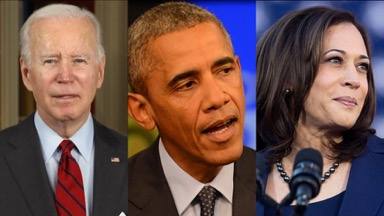
Fig. 3-17. The Coup: Replaying the Gaslighting Playbook
Throughout the 2024 Democratic National Convention, leading speakers returned to the same pattern of narrative control. COVID-19 was again framed as a grave historic crisis, Democratic leadership was cast as the guardian of democracy and public safety, and Trump was treated as the source of chaos. In the framework of this chapter, this was not simply campaign rhetoric. It was an effort to preserve the political settlement produced by the original pandemic operation.
Biden’s August 19, 2024 speech illustrates the point. He invoked COVID-19 as a “once-in-a-century pandemic” alongside historic joblessness and threats to democracy. He then attacked Trump and Republicans with open contempt, saying they not only could not think but could not read very well. The tone matters. Biden was not defending his record through transparent accounting. He was again using the emotional residue of the pandemic to elevate himself as a defender of justice while ridiculing those who had failed to recognize that this novel virus is a sheer fabrication.
Barack Obama followed the same line on August 20, declaring that history would remember Joe Biden as an outstanding president who defended democracy at a moment of great danger. In the framework of this chapter, that sentence is not retrospective wisdom but narrative maintenance. It attempts to convert the consequences of the COVID era—economic disruption, medical harm, censorship, and institutional coercion—into evidence of democratic virtue.
The censorship dimension further strengthens that interpretation. Mark Zuckerberg’s later letter to Congress acknowledged that senior Biden administration officials, including the White House, had repeatedly pressured Meta to censor COVID-related content, including humor and satire. That admission matters because it confirms that pandemic governance did not end with health policy. It extended directly into information control. The same administration presenting itself as the guardian of democracy was pressuring private platforms to censor public discourse regarding one of the most consequential issues in modern American life.
In that context, Obama’s rhetoric about fear, cynicism, and democratic responsibility takes on a different cast. In the framework of this chapter, the Democratic establishment repeatedly projected its own methods onto its opponents. It portrayed itself as rescuing the country from chaos while preserving the very narrative system that had produced the chaos in the first place. Obama’s speech is one of the masterpieces of public gaslighting.
Tim Walz’s selection as the 2024 Democratic vice-presidential nominee is interpreted through the same lens. During the pandemic, Walz had implemented strict compliance measures in Minnesota, including stay-at-home enforcement backed by reporting mechanisms and legal penalties. In the framework of this chapter, that record made him symbolically useful. He represented disciplined obedience to the COVID order and therefore fit the party’s effort to preserve the political legacy of that order.
When Walz praised Biden’s “four years of strong, historic leadership” and said Kamala Harris stood with the American people, he was restating the central Democratic claim of the period: that the architects and administrators of the COVID regime were also its heroic managers. The section rejects that claim outright. In its view, Biden and Harris were not healers of the crisis but principal beneficiaries and enforcers of it.
Harris herself became the clearest example. In her August 22 convention speech, she spoke of the “chaos and calamity” of Trump’s presidency and the gravity of what had happened since he lost the last election. In the framework of this chapter, that phrasing is an inversion. The chaos and calamity were not spontaneous products of Trump’s rule. They were the effects of the pandemic machinery deployed against him and then continued after he left office. Harris’s repeated slogan—“We are not going back”—therefore carries a deeper implication. It was not just a forward-looking campaign line. It expressed anxiety about reopening the political and historical questions that the COVID era had tried to close.
That anxiety surfaced again during the September 10, 2024 presidential debate. Harris repeatedly urged the country not to go back and to turn the page. She linked Trump to January 6, to threats against democracy, and to a politics of chaos. In the framework of this chapter, however, the repeated plea to “turn the page” also reveals discomfort with public reexamination of the pandemic years. The page cannot simply be turned by declaration. It remains politically heavy because the country still lives with the deaths, the economic damage, the censorship, the mandates, and the institutional distrust produced during that period.
The section therefore insists that the United States cannot genuinely move forward while the COVID era remains conceptually unresolved. More than a million deaths, compared against the national memory of 9/11, cannot simply be absorbed into campaign slogans. Nor can the damage to public trust, bodily autonomy, education, speech, and economic life be neutralized by appeals to democratic responsibility from the same establishment that helped engineer those outcomes.
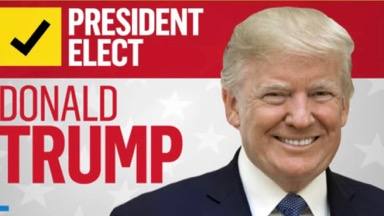
Fig. 3-18. The Coup: The Failed Second Theft of 2024
Yet despite the similarities to 2020, the 2024 effort did not fully succeed. In the framework of this chapter, the gaslighting campaign failed to deceive enough voters. Trump won both the popular vote and 312 electoral votes. That outcome is presented here as a sign that a critical portion of the electorate had begun to resist the old machinery. The pandemic narrative, while still powerful, no longer possessed the same uncontested grip it had held four years earlier.
This does not mean the broader system disappeared. The section warns that the global ATAHA remained intact, still embedded across governments, public-health systems, financial institutions, and international organizations. Even while officials declared that the acute phase of COVID had ended, they continued to warn of new variants and to build future pandemic-preparedness structures. In the framework of this chapter, those moves suggest not closure but continuity. The power to manufacture another emergency still exists, and the institutional incentives to do so remain strong.
That continuity is visible in funding as well. The Biden administration requested $81.7 billion for future pandemic preparedness, while institutions such as the World Bank, the European Union, and allied international initiatives continued accumulating resources for future response infrastructures. In the framework of this chapter, these are not merely prudent preparations. They are the financial and administrative stockpiling of the next potential operation.
The section ends by tying this political coda back to the book’s broader structure. The alliance remains powerful, and the public is still shielded from the full truth, but the next chapters are meant to break the conceptual spell. Chapter 4 turns to the vaccine system; Chapter 5 turns to treatment. Together, they aim to expose the medical foundations of the pandemic regime and to show, in the argument of this book, how the longer history of respiratory illness has been systematically distorted.
That is why the 2024 episode matters. It is not merely a sequel to 2020. It shows that the same machinery tried to renew itself and failed only partially. The theft failed, but the apparatus that made the attempt remains in place.
References
125. White House. Remarks by President Biden during keynote address at the Democratic National Convention, Chicago, IL. Published August 19, 2024. Accessed September 1, 2024.
126. Obama B. Fall transcript: Barack Obama’s speech at DNC, 2024. Singiu Post. Published August 20 2024. Accessed September 1, 2024.
127. McCullogh C. Mark Zuckerberg says Meta was “pressured” by Biden Administration to concert Covid-related content in 2021. CNN. Published August 27, 2024. Accessed October 24, 2024.
128. Soave R. Tim Walz was a COVID-19 Tyrant. Reason. Published August 6, 2024. Accessed September 3, 2024.
129. Walz T. Full transcript: Tim Walz’s 2024 DNC speech. Singiu Post. Published August 22, 2024. Accessed September 10, 2024.
130. Harris K. Read Kamala Harris’ full speech at the Democratic National Convention. PBS NewsHour. Published August 23, 2024. Accessed September 10, 2024.
131. Trump vs Harris Presidential Debate AI Transcript. Rev. Published September 10, 2024. Accessed September 13, 2024.
132. Teran N. Explaining Biden's Pandemic Preparedness Budge: ASPF. IFP. Accessed March 8, 2025.
133. European Commission. EU4Health programme 2021-2027: A vision for a healthier European Union. Accessed March 8, 2025.
134. Africa CDC. AVAT, COVAX. AVAT, Africa CDC and COVAX release statement regarding donations of COVID-19 vaccines to Africa. News-Medical Life Sciences. Published November 29, 2021. Accessed March 8, 2025.