
Michelle Obama’s August 2020 Democratic National Convention speech served, in the framework of this chapter, as an early and highly polished version of the gaslighting campaign that Joe Biden, Kamala Harris, and Barack Obama would intensify on the eve of the election. By the time she spoke, the country had already been pushed into a manufactured social, economic, and humanitarian crisis. Lockdowns had shuttered businesses, mass testing had expanded the appearance of contagion, and official treatment protocols had already deepened public harm. Michelle Obama then used that devastation as political evidence against Trump.
She told the convention that more than 150,000 people had died, that the economy was in shambles because Trump had downplayed the virus for too long, that millions were jobless, and that too many families were struggling with food, rent, healthcare, and school closures. She also argued that the United States had turned its back on international alliances built by earlier presidents. She then delivered the core political verdict: Donald Trump was the wrong president for the country, had received more than enough time to prove himself, was clearly in over his head, and could not meet the moment.
That structure is familiar by now. The pandemic’s deaths, economic dislocation, institutional panic, and social breakdown were all gathered into a single prosecutorial narrative and laid at Trump’s feet. In the framework of this chapter, however, that move reversed cause and effect. The same political and institutional forces driving lockdowns, testing expansion, and emergency rule then used the resulting damage to portray Trump as uniquely responsible for it.
Michelle Obama’s speech matters because it came months before the final November push. It helped establish the emotional grammar of the later campaign: mass suffering, failed leadership, moral urgency, and the implication that only Democratic restoration could rescue the country. In that sense, her address was not a side note. It was an early major contribution to the rhetorical architecture of the coup described in this chapter.
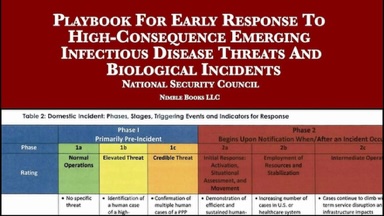
Fig. 3-13. Obama Administration: Crafting a Playbook to Mislead
What distinguished her speech from the November remarks by Biden, Harris, and Obama was her more implicit reference to preparedness and institutional continuity. Her criticism suggested that Trump had failed not only morally but procedurally—that he had ignored the governing wisdom and internationalist structures that supposedly would have handled the crisis competently. In the framework of this chapter, that implication points directly toward the pandemic “playbook” produced in the final days of the Obama administration.
The Playbook for Early Response to High-Consequence Infectious Disease Threats and Biological Incidents, released in early 2017, is treated here not as a neutral planning document but as a strategic instrument. Michelle Obama’s line of attack effectively cast Trump’s refusal to operate inside that framework as negligence. But in the framework of this chapter, his refusal should be read differently. It suggested that he sensed the trap embedded in the system he inherited.
The argument of this section is that the playbook was built by entrenched pandemic experts and Deep State operators whose influence extended across the federal bureaucracy—State, USAID, HHS, Defense, Agriculture, EPA, DHS, and related institutions. These were not marginal figures. They represented an administrative culture that had already spent decades managing or exploiting earlier outbreak narratives such as Swine Flu, Ebola, Zika, and HIV/AIDS. In the framework of this chapter, those earlier episodes were not reliable evidence of scientific stewardship. They were precedents for the machinery later deployed under COVID-19.
From that perspective, the playbook was less a guide to public protection than a standing template for future emergency mobilization. Its practical function was to channel any new administration back into the same institutional pathways: surveillance, testing, interagency coordination, expert dominance, and rapid escalation under the banner of infectious threat. Trump’s dismantling of parts of that response apparatus is therefore presented here not as recklessness but as partial resistance to a preexisting system.
That is one reason Michelle Obama’s criticism matters. It was not just an attack on Trump’s temperament. It was a defense of the administrative worldview he had resisted. In the framework of this chapter, the people who built those systems later aligned with the broader global alliance acting against Trump during his reelection campaign. COVID-19 then became the instrument through which those bureaucratic, political, and international forces reasserted themselves.
The section’s deeper concern is therefore epistemic as much as political. Michelle Obama’s speech treated the pandemic narrative as settled truth: the virus was real, Trump had failed, and the suffering proved it. But the book insists that none of those premises should have been accepted without far more scrutiny. Before invoking death counts, economic collapse, or international embarrassment as political evidence, the relevant experts should first have been required to answer much more basic questions about the nature of respiratory illness, the 33°C discovery, the physical plausibility of viral invasion, the fabrication of the SARS-CoV-2 genome, and the claimed proof of viability and infectiousness.
In the framework of this chapter, those unanswered questions expose the weakness beneath the confidence of the pandemic establishment. Michelle Obama’s speech was powerful because it drew moral force from human suffering. But it also depended entirely on the prior acceptance of the COVID narrative constructed by the same institutions this book challenges. Once that narrative is disputed, her indictment of Trump becomes far less secure.
That is why she is treated here as a gaslighter rather than merely a partisan speaker. She took a crisis already shaped by coordinated institutional action and used its visible wreckage to reinforce the claim that Trump alone was unfit to lead. In the framework of this chapter, that was an essential part of the larger operation: turning a manufactured emergency into an argument for political removal while presenting the guardians of the system as the voices of responsibility and care.
References
118. Obama M. Transcript: Michelle Obama’s DNC speech. CNN Politics. Published August 18, 2020. Accessed October 2, 2022.
119. Knight V. PBS News. Obama team left pandemic playbook for Trump administration, officials confirm. PBS NewsHour. Published March 15, 2020. Accessed March 12, 2023.