
Kamala Harris, the Democratic vice-presidential nominee, served as the third major figure in this chapter’s account of election-season gaslighting. On November 2, 2020, she spoke in Philadelphia and delivered a message tightly aligned with Joe Biden and Barack Obama. The coordination was unmistakable. The pandemic was framed as catastrophic, Trump was framed as culpable, and Democratic victory was framed as the path to rescue.
Harris described COVID-19 as a public-health crisis on a scale not seen before and called it a “mass casualty event” that was equal to or greater than what the United States experienced in World War II. She emphasized that more than 225,000 people had died, that more than 9 million had contracted the virus, and that many would suffer long-term consequences such as lung scarring. She then pivoted to Biden, praising his experience and saying that back in March he had already told the party what needed to be done.
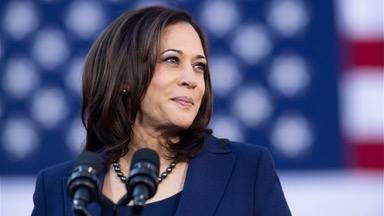
Fig. 3-12. Kamala Harris: Gaslighting as the Installed VP
That formulation is revealing. Like Biden and Obama, Harris used death totals, case counts, and predicted long-term damage to intensify the emotional weight of the moment and direct it politically. In the framework of this chapter, the move was not simply descriptive. It was strategic. The larger the catastrophe appeared, the stronger the case for removing Trump and installing the Democratic ticket as the responsible alternative.
Her comparison to World War II is especially striking. It magnified the crisis into a civilization-level trauma and cast the election as an answer to national emergency. In the framework of this chapter, such language also exposed how expansive the operation had become. The pandemic was no longer being described as a difficult health episode. It was being narrated as a national calamity of historic scale, one that justified extraordinary political transformation.
Harris then said that “Joe, back in March, told us what we needed to do about this pandemic.” That line invites a deeper question: who exactly was the “we”? In the framework of this chapter, March 2020 was the decisive month in which the domestic branch of the operation consolidated itself. Congress approved emergency appropriations, the pandemic declaration was echoed and amplified, and the lockdown regime began taking national form. Harris’s language suggests not merely hindsight but alignment with a program already in motion.
That larger framework matters because March 2020 was not only a period of public messaging. It was also a period of legal and institutional preparation. On March 17, the Secretary of Health and Human Services issued the PREP Act declaration for medical countermeasures against COVID-19. That declaration granted broad liability immunity to covered persons involved in the manufacture, testing, development, distribution, administration, and use of COVID countermeasures.
In the framework of this chapter, that declaration was not a routine legal safeguard. It was one of the clearest signs that the system was preparing for aggressive intervention while shielding participants from future accountability. The legal architecture was being set so that those administering tests, treatments, vaccines, and other countermeasures could operate under an umbrella of protection.
That matters because the pandemic response was never only rhetorical. It required institutions, money, compliance, and legal insulation. If the operation was to move from testing and lockdowns into mass countermeasure deployment, the practitioners had to know they would be protected. The PREP Act framework provided precisely that assurance.
The section then extends the point historically. PREPA had been signed in 2005 under President George W. Bush under the banner of biodefense. In the framework of this chapter, its reactivation in 2020 shows continuity across administrations rather than a unique emergency improvisation. The same legal machinery could be revived whenever a pandemic event required broad immunity for the actors driving it.
That continuity is central to the book’s larger argument. The relevant structure is not merely partisan. It is institutional. The Deep State, in the language of this chapter, functions as a durable operational mechanism embedded within government and able to persist across Democratic and Republican presidencies alike. COVID-19 therefore did not arise from one administration alone. It activated a standing framework of emergency governance, legal insulation, and public deception.
Harris’s speech did not spell out any of this directly, of course. But in the framework of this chapter, her role was to translate the operation into morally compelling political language. She spoke of death, suffering, separation from loved ones, and long-term injury. She praised Biden as the figure who had seen what needed to be done from the beginning. In doing so, she helped convert the machinery of pandemic management into a case for electoral transfer of power.
The section broadens the point even further by arguing that this pattern was not unique to the United States. Legal protection, narrative management, and institutional coordination appeared across countries during the pandemic. Governments, public-health systems, and media environments repeated the same core messages: the virus was deadly, the emergency was real, the countermeasures were necessary, and the dissenters were dangerous. Later claims that vaccines prevented millions of deaths functioned, in the framework of this chapter, as the retrospective justification of that entire system.
This is why Harris is treated here as more than a campaign surrogate. She was one of the principal voices translating a manufactured emergency into electoral legitimacy. By combining catastrophic rhetoric, moral urgency, praise for Biden’s March posture, and implicit trust in the legal-medical apparatus already being built, she helped frame Democratic victory not as a partisan outcome but as a humanitarian necessity.
In the framework of this chapter, that is the essence of her gaslighting role: she used the official numbers, the official suffering, and the official narrative to persuade the public that the same alliance constructing the crisis was also the only force capable of saving the country from it.
References
116. Harris K. Campaign event speech transcript Pennsylvania. Rev. Published November 2, 2020. Accessed November 6, 2023.
117. Department of Health and Human Services. Declaration Under the Public Readiness and Emergency Preparedness Act for Medical Countermeasures Against COVID-19. Federal Register. Document Number: 2020-05484. Published March 17, 2020.