
November 3, 2020 was the voting day of the 59th U.S. presidential election. In the framework of this chapter, the election took place after ten months of sustained political conditioning. The American branch of the ATAHA had already spent most of the year shutting down the economy, expanding mass testing, inflating case counts, amplifying death totals, and directing public anger toward Donald Trump. By Election Day, the crisis had been turned into a political atmosphere.
The final phase came on November 2, 2020. At a rally in Cleveland, Joe Biden delivered what this section treats as a closing argument for the COVID campaign against Trump. He said that no matter how hard Trump tried, he would not stop Americans from voting, and that it was time for Trump to “pack his bags and go home.” Biden’s tone was not cautious or uncertain. It was triumphant. He spoke as though the verdict had already been prepared.
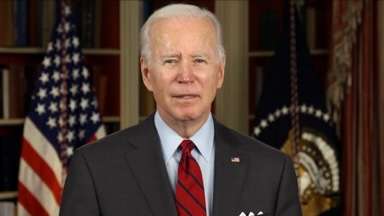
Fig. 3-10. Joe Biden: Gaslighting as the Installed President
One line stood out: “He hasn’t figured it out.” In the framework of this chapter, that line does more than taunt Trump politically. It captures the deeper asymmetry of the entire conflict. Trump had not figured out that the so-called virus was, in the argument of this book, the central fiction of a coordinated operation. He recognized hostility, manipulation, and institutional bad faith, but he did not fully escape the virological frame that made the operation possible. Biden, by contrast, spoke like someone who understood exactly how the battlefield had been arranged.
He then promised immediate action if elected. On “Day One,” he said, he would move to get COVID under control through masking, social distancing, testing, and tracing. That promise is revealing because it presented the next phase of the operation as competence rather than continuity. Biden was not offering a break from the COVID regime. He was offering a more disciplined administration of it.
In the framework of this chapter, the supposed control phase after the election was strategic rather than medical. Once the election had been decided, the emergency could be modulated. Reported daily cases later fell sharply, creating the appearance that a more serious and science-driven administration had succeeded where Trump had failed. But that decline, on the logic of this book, did not reveal improved viral management. It reflected a strategic contraction implemented through the close cooperation of the Task Force: the crisis could be cooled temporarily while the next stage was prepared.
That next stage was the vaccine push. After a period of relative contraction, case counts surged again on a massive scale, and the new rise was used to intensify pressure for mass vaccination. In the framework of this chapter, that was not an accidental new wave but a strategic offensive. The pandemic had already served one political function—damaging Trump. It would now serve another: driving the population toward pharmaceutical submission.
Biden’s speech framed the entire crisis as Trump’s failure. He said the country would not have had millions of confirmed cases, hundreds of thousands of deaths, or daily record numbers if Trump had acted honestly. He accused Trump of knowing the virus was deadly, worse than the flu, and not destined to disappear, yet hiding that truth from the public. The structure of the argument was simple and politically potent: the virus was real, the danger was obvious, and Trump had let Americans die.
That was the central gaslighting move. Biden took the official narrative in its most aggressive form and used it to assign moral and political blame to the incumbent president. In the framework of this chapter, however, the causal chain runs differently. Trump did not create the pandemic machinery. He was trapped inside it. The testing apparatus, the emergency models, the institutional propaganda, and the policy escalations were built and driven by the U.S. Branch of the ATAHA now blaming him for their consequences.
Biden also accused Trump of insulting doctors by suggesting that COVID deaths were being inflated for money. He cast physicians, nurses, and healthcare workers as heroic victims of Trump’s cynicism. The rhetoric was effective because it wrapped institutional authority in moral virtue. Once that move succeeded, criticism of death attribution, hospital protocols, or financial incentives could be dismissed as an attack on front-line caregivers rather than as scrutiny of a system.
The section rejects that inversion. The question is not whether health workers suffered; many clearly did. The question is who created the conditions of harm, who defined the protocols, and who benefited from the emergency. In the framework of this chapter, those answers do not point to Trump. They point to the alliance that built the COVID regime and then used its human toll as campaign material.
Biden’s praise of Fauci sharpened that point. After Trump suggested Fauci might be fired, Biden responded that if elected he would hire Fauci and fire Trump instead. That line was politically clever, but it was also revealing. Fauci was not a peripheral official. He was one of the principal technical managers of the COVID narrative in the United States. Biden’s embrace of him signaled continuity between the public-health apparatus and the political project that benefited from it.
When Biden said Trump had waved the white flag of surrender to the virus, he completed the reversal. In the framework of this chapter, Trump had not surrendered to the virus so much as he had been forced into a battlefield designed by his opponents. The real surrender being demanded was political: accept the emergency, accept the blame, accept removal. Biden then stated the logic of the campaign almost openly: “The first step to beating the virus is beating Donald Trump.”
That line may have been intended as a campaign flourish, but within this chapter it reads as a confession of motive. The virus was not merely the subject of the election. It was the instrument through which the election was transformed. The crisis created the fear, the disruption, the economic damage, and the political narrative needed to weaken Trump’s reelection path and justify replacing him.
The section therefore presents Biden not as a commentator standing outside the pandemic, but as one of its principal political beneficiaries and narrators. He used the language of competence, compassion, and science to turn a manufactured emergency into an electoral indictment. In the framework of this chapter, that is why he is treated as a gaslighter: he did not simply campaign during the crisis. He helped weaponize the crisis into the final argument for removing the president.
References
112. Biden J. Rev. Drive-in rally speech transcript Cleveland. Rev. Published November 2, 2020. Accessed November 3, 2023.
113. World Health Organization. The United States situation. Accessed March 24, 2023.