
Barack Obama was the second major Democratic figure to weaponize the COVID narrative directly against President Trump in the closing hours of the 2020 election. On November 2, 2020, he traveled to Atlanta, Georgia—a state that had become politically pivotal—and delivered a speech urging voters to back Joe Biden. In the framework of this chapter, Obama’s role was not incidental. He helped convert the final pandemic numbers into a last-minute electoral indictment.
He told the crowd that 230,000 Americans were dead, more than 100,000 small businesses had closed, and nearly 200,000 jobs were gone in Georgia alone. He then argued that if Trump and Georgia’s senators had focused on COVID from the beginning instead of their “portfolios” or “TV ratings,” the country would not be seeing record case numbers just days before the election.
That argument followed the same structure Biden used: turn the crisis into a moral ledger, assign every cost to Trump, and present the Democratic ticket as the responsible alternative. In the framework of this chapter, however, that inversion is exactly the point. It was precisely the same political forces—which previously supported lockdowns, case expansion, testing escalation, and emergency rule—that subsequently exploited the resulting social damage as evidence of Trump’s failure.
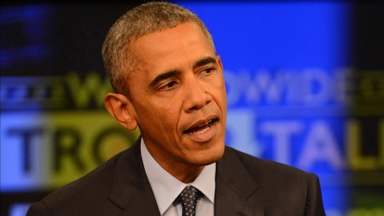
Fig. 3-11. Barack Obama: Gaslighting for Biden and Harris
Obama also emphasized that the week before the election had become the worst week yet for new cases in the United States. That claim is politically revealing. In the framework of this chapter, the timing of that surge was not merely epidemiological. It was strategically political. Inflated infection numbers in the final week intensified the sense of national breakdown and maximized the political value of blaming Trump at the exact moment voters were about to make their decision.
The pattern is hard to miss. Biden and Obama both delivered closing speeches on November 2. At the same time, the country was being told that it had just experienced its worst week of the pandemic. In the framework of this chapter, those developments were not separate. The final spike in fear and the final push in messaging worked together. The virus narrative was being used as a political weapon at the decisive hour.
Obama then praised those who had quarantined, worked from home, and cared for their children while trying to “keep everybody safe.” He said that after all those sacrifices, the country still saw its worst week because Trump and Georgia’s senators had not taken the pandemic seriously. He also invoked Trump’s chief of staff, who had said that the administration was not going to control the pandemic.
That line mattered because it allowed Obama to portray the Trump administration’s resistance as defeatism. But in the framework of this chapter, it suggests something else: that the pandemic was designed by the ATAHA to be politically unmanageable from the beginning. If the official system defined success in terms of controlling an endlessly expanding case count produced by testing, then Trump could always be accused of failure no matter what he did. Trump was trapped inside a metric designed to condemn him.
Obama then sharpened the contrast. He told the audience that Joe Biden and Kamala Harris could get on top of the pandemic, and that electing two new Democratic senators from Georgia would help make that happen. He mocked Trump’s rallies as a “COVID spreader tour,” portraying Trump as a kind of carrier who cared more about crowds than about safety.
That rhetoric did two things at once. First, it personalized the crisis around Trump, turning him into a symbol of contagion. Second, it implied that Biden and Harris possessed the seriousness and competence needed to restore order. In the framework of this chapter, however, the deeper implication is different: Biden and Harris were not outside the operation. They were among its principal beneficiaries and political executors.
Obama’s promise that Biden and Harris could control the pandemic should be read in that light. It was not evidence of superior epidemiological insight. It was a declaration that the Democratic ticket could manage the next stage of the same apparatus. The first phase had destabilized Trump’s presidency; the next would consolidate power under the banner of restoring control.
The chapter extends that interpretation beyond the election itself. Under Biden and Harris, lockdown logic, mass vaccination, and pharmaceutical governance continued to dominate national life. Even when the emergency appeared to recede, the machinery remained. Biden later declared an end to the acute phase of the pandemic while still proposing $81.7 billion for future pandemic preparedness. In the framework of this chapter, that was not closure. It was institutional consolidation.
Obama’s praise for Anthony Fauci further clarifies the alignment. He highlighted Fauci as one of the few serious figures in the administration, praised his earlier work on Ebola, H1N1, and HIV/AIDS, and presented him as a leading infectious-disease expert who had taken the crisis seriously all along. This praise is significant because it places Obama squarely on the side of the same technocratic authority that shaped the pandemic response.
Trump’s attitude toward Fauci was the opposite. Trump increasingly saw him as part of the problem and openly discussed firing him. Obama responded by defending Fauci’s institutional prestige. In the framework of this chapter, that contrast matters. Trump’s instinct moved toward removing the technical architect of the COVID regime; Obama moved to protect him.
The section therefore presents Obama not simply as a former president campaigning for his party, but as a legitimizer of the pandemic narrative at a decisive electoral moment. He used death counts, economic pain, quarantine rhetoric, and case surges to persuade voters that Trump had failed catastrophically and that Democratic leadership would restore competence. In the framework of this chapter, that was gaslighting at a national scale: using the consequences of a constructed emergency to justify the political transfer of power it had been designed to produce.
References
114. Obama B. Drive-in Rally Speech for Joe Biden Transcript Atlanta, GA. Rev. Published November 2, 2020. Accessed November 3, 2023.
115. Teran N. Explaining Biden’s pandemic preparedness budget: ASPR. Institute for Progress. Published May 19, 2022. Accessed November 16, 2023.