
The British discovery of the 1950s—that 33°C is the critical threshold behind upper respiratory tract infections—has hung over virology and epidemiology ever since. It threatened the central premises on which those fields were built. Rather than confront it, medical authorities distorted it. After assuming the lead editorship of Harrison’s Principles of Internal Medicine in 1998, Anthony Fauci and his associates recast 33°C, a pathological threshold of physiological failure, as though it were the normal temperature of the upper respiratory tract. They wrote:
In contrast to other members of the picornavirus family, such as enteroviruses, rhinoviruses are acid-labile and are almost completely inactivated at pH ≤ 3. Rhinoviruses grow preferentially at 33°C to 34°C (the temperature of the human nasal passages) rather than at 37°C (the temperature of the lower respiratory tract).,,,
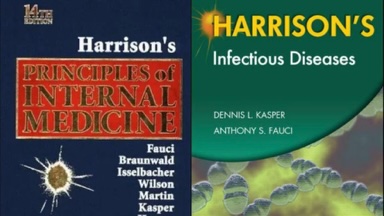
Fig. 1-12. Fauci: Defining Respiratory Tract Temperature as 33°C
This passage contains three immediate distortions. First, the viral activity trap: the claim that rhinoviruses are “inactivated” at low pH treats the virus as if it were an independently living entity. Outside the human cell, however, the virus shows no autonomous life. To say it becomes “inactivated” is to ascribe to it a biological status it never possessed.
Second, the viral growth trap: the statement that rhinoviruses “grow preferentially” at 33°C to 34°C substitutes vague language for the real issue. Viruses do not feed, enlarge themselves, or grow in the ordinary biological sense. The British finding showed that cooling the upper respiratory epithelium to 33°C damages the barrier and makes cellular entry possible. The operative event is barrier failure followed by replication, not viral “growth.” The wording therefore redirects attention away from the physical mechanism.
Third, the nasal temperature trap: the assertion that 33°C to 34°C is the normal temperature of the human nasal passages is itself the decisive distortion. Human core temperature is maintained near 37°C. The nasal passages are richly vascularized and continuously warmed by circulating blood. To relabel 33°C as normal is to disguise a state of injury as ordinary physiology.
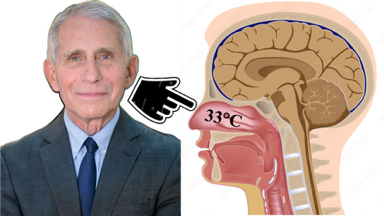
Fig. 1-13. NIAID: Epicenter of the 33°C Conspiracy
These distortions were propagated through two especially influential texts: Harrison’s Principles of Internal Medicine and Harrison’s Infectious Diseases. Fauci served as lead editor of the former and as one of the authors of the latter. Together they helped sever the causal relationship between cold exposure and URTIs, insisting:
Despite anecdotal reports to the contrary, the exposure of volunteers to cold, fatigue, or sleep deprivation has not been shown to increase the incidence of disease caused by rhinovirus.”,
That sentence does more than summarize a disputed claim. It functions as a gatekeeping formula. If cold is ruled out in advance, then the entire field of explanation must remain confined to viruses, immunity, vaccines, and drugs. The physical mechanism is excluded before the discussion even begins.
The result was a specialty built on the false proposition that URTIs are caused exclusively by infectious microorganisms rather than by thermal failure of the upper respiratory tract. In that sense, the distortion of 33°C was not incidental to infectious-disease specialization. It was central to its survival.
Benjamin Franklin’s famous reflections on cold help clarify the problem. In 1773, he wrote that he had endured severe winter travel and prolonged immersion in water without “catching cold.” But Franklin mistook ambient exposure for the decisive factor when the real turning point was the drop in peripheral body temperature. The relevant question is not whether the outside environment is cold. It is whether the temperature of the upper respiratory tract falls to the critical threshold. If it does not, infection does not occur. If it does, infection becomes physically possible regardless of whether the person is in the Arctic or in Africa.
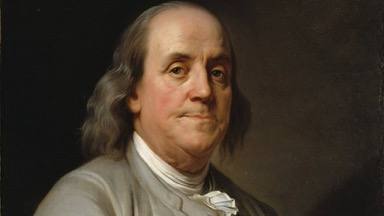
Fig. 1-14. Historical Uncertainty Regarding Cold Etiology
This intuition is embedded in ordinary language itself. The English phrase “catch cold” and the Chinese term shouhan express the same basic truth: respiratory illness follows thermal compromise. In the framework of this chapter, the role of modern infectious-disease specialization has been to overwrite that human understanding with a professionally managed fiction.
References
16. Fauci AS, Martin JB, Braunwald E, et al. Harrison’s Principles of Internal Medicine. 14th ed. New York, NY; McGraw-Hill education. 1998:1101.
17. Fauci AS, Braunwald E, Kasper DL., et al. Harrison's Principles of Internal Medicine. 17th ed. New York, NY; McGraw-Hill Education. 2008:1120.
18. Kasper DL, Fauci AS, Hauser SL, et al., eds. Harrison’s Principles of Internal Medicine. 19th ed. New York, NY; McGraw-Hill Education. 2015:1202-03.
19. Jameson JL, Fauci AS, Kasper DL, et al., eds. Harrison's Principles of Internal Medicine. 20th ed. New York, NY; McGraw-Hill Education. 2018:869.
20. Kasper DL, Fauci AS, Hauser S L, et al., eds. Harrison's Principles of Internal Medicine. 19th ed. New York; McGraw Hill. 2015:1203.
21. Fauci AS, Kasper DL. Harrison's Infectious Diseases. 3rd ed. New York, NY; McGraw-Hill. 2017:767
22. Franklin B. From Benjamin Franklin to Benjamin Rush, 14 July 1773. Founders Online. National Archives. Accessed November 3, 2023.