
How, then, do viruses enter the epithelial cells of the upper respiratory tract? The authorities of Western medicine are not ignorant of the fact that infectious viruses do not, by themselves, explain upper respiratory tract infections (URTIs). In the 1950s, British scientists reported a crucial experimental finding:
The rhinoviruses were initially difficult to cultivate in the laboratory, since most failed to infect laboratory animals or cell cultures. In the 1950s, researchers in England accidentally discovered that if cell cultures (of monkey or human origin) were incubated at 33°C (91.4°F) instead of at body temperature (37°C) … many rhinovirus strains would infect them.,

Fig. 1-4. British Discovery: 33°C Causes Respiratory Infections
This finding indicates that when the temperature of the upper respiratory tract drops to 33°C, viruses gain entry into host cells. The rational explanation is not that this temperature somehow grants viruses an active power of penetration. Rather, the drop to 33°C causes microscopic fissures to form in the epithelial barrier. These fissures create a pressure differential between the sterile internal environment and the surrounding air. Air naturally flows from high-pressure to low-pressure zones, passively carrying viruses through these physical breaches.
A core body temperature of 33°C is lethal; at that threshold, systemic cellular collapse is imminent. Although the upper respiratory epithelium is a surface tissue, it serves as a critical interface for maintaining core temperature. When the ciliated pseudostratified columnar cells of this epithelium—the primary physical defense of the upper respiratory tract—are subjected to a 33°C chill, their structural integrity is compromised. At that threshold, the tight junctions between epithelial cells fail, producing microscopic fissures that breach the body’s first line of defense.
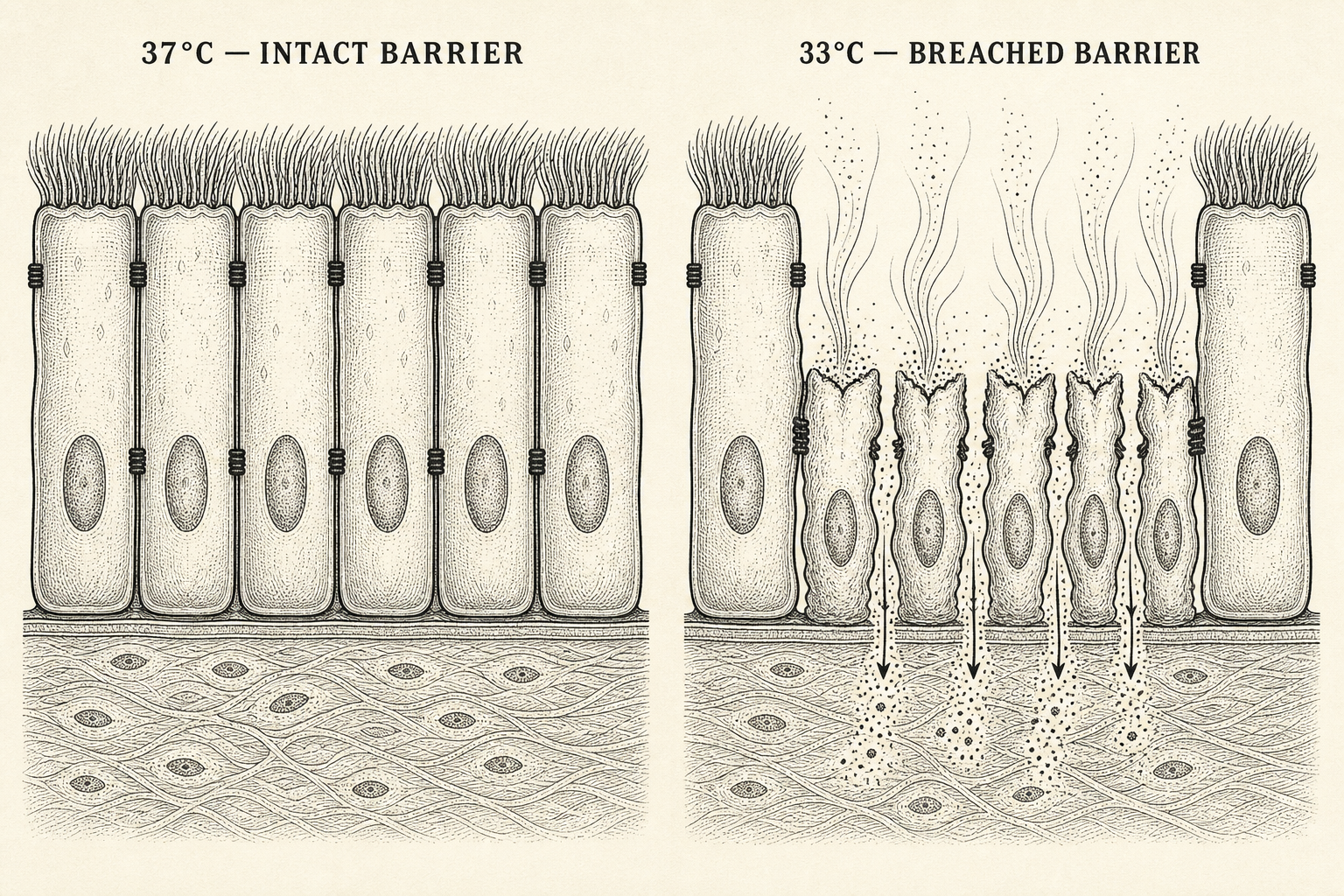
Fig. 1-5. 33°C: Inducing Microscopic Fissures in Epithelial Cells
The upper respiratory tract is a large and structurally varied organ. Its epithelial cells do not all respond identically to cold stress. The cells of the nasopharynx are especially vulnerable, particularly the mucus-secreting goblet cells, whose cytoplasm has a high water-content. When the local temperature falls to 33°C, the gel-like cytoplasm may contract unevenly, causing rupture of the cell membrane.
Through these microscopic fissures, viruses are drawn into host cells by ambient pressure dynamics and the internal pull of the intracellular environment. Once inside, the virus shifts from a dormant state to an active replicative state. Like an automated photocopier, it replicates continuously; the copies either move outward or accumulate until the cell bursts, thereby triggering an upper respiratory infection.
The British findings on human respiratory infection parallel the principle long recognized in botany. Plant viruses are not treated as inherently infectious in the abstract; they enter plant cells through wounds caused by insect bites or severe weather:
When plant viruses infect a plant cell, they do not attach to specific receptors. Instead, they enter through wound sites in the cell wall, which is otherwise tough and rigid. Once started, infection in the plant can spread from cell to cell through openings, the plasmodesmata, that interconnect cells.,

Fig. 1-6. Botanists: Physical Damage Induces Plant Cell Rupture
The epithelial cells of the human pharynx and the cells of plant leaves both possess robust membrane structures. Their susceptibility to viral entry therefore follows a similar physical logic. Just as plant membranes rupture through insect damage or severe weather, the human pharyngeal membrane ruptures when local temperature falls to 33°C. In both cases, contraction and expansion of the gel-like cytoplasm produce mechanical membrane failure. These structural breaches, together with aerodynamic forces, permit viruses to enter the host cell.
The British findings also validate a conventional, cross-cultural intuition preserved in folklore and traditional medicine: respiratory infections follow bodily heat loss caused by inadequate clothing. Across cultures and generations, elders have warned children to dress warmly to avoid “catching a cold.” The British research gives this old wisdom a more precise physical meaning: if insufficient clothing allows upper respiratory temperature to fall to the 33°C threshold, infection becomes physically possible and, under those conditions, predictable.

Fig. 1-7. British Discovery: Echoing Cold-Exposure Folklore
This discovery had major implications. If accepted, it would shift attention away from the idea of an autonomous infectious virus and toward the physical failure of the upper respiratory barrier. It would also align modern observation with long-standing practical wisdom about cold exposure. For those whose careers and industries depend on the infectious-virus narrative, such an implication is deeply threatening. In my view, that is why this line of understanding was suppressed, traditional knowledge was dismissed, and vaccines and anti-viral drugs continued to be promoted aggressively.
References
3. Nester EW, Anderson DG, Roberts CE, Pearsall NN, Nester MT. Microbiology: A Human Perspective. 3rd ed. New York, NY; McGraw-Hill. 2001:561.
4. Nester EW, Anderson DG, Roberts CE, Pearsall MT & Nester MT. Microbiology: A Human Perspective. 4th ed. New York, NY; McGraw-Hill. 2004:573.
5. Guyton AC, & Hall JE. Textbook of Medical Physiology. 11th ed. Philadelphia, PA: W. B. Saunders Company. 2006:889-900.
6. Nester EW, Anderson DG, Roberts Jr. CE, Nester MT. Microbiology: A Human Perspective. 8th ed. New York, NY; McGraw-Hill. 2022:355.
7. Nester EW, Anderson DG, Roberts Jr. CE, & Nester MT (2011). Microbiology: A Human Perspective (4th ed.). McGraw-Hill Education. P.364.